
Introduction
The evolution of digital entertainment has always focused on making virtual experiences feel more realistic. From high-definition graphics and spatial audio to advanced motion tracking, technology continues to blur the boundaries between physical and digital environments. However, one essential element has often been missing: the sensation of touch.
Haptic realism is changing that limitation. Next-generation feedback engines are introducing sophisticated tactile sensations that allow users to feel vibrations, resistance, textures, and environmental interactions. Whether navigating a virtual battlefield, driving a racing car, or exploring immersive virtual worlds, these innovations are transforming how people interact with digital content.
Understanding Haptic Realism in Modern Technology
Haptic realism refers to the use of advanced feedback systems that simulate physical sensations during digital interactions. Traditional vibration technology typically produces simple buzzing effects, while modern haptic engines can deliver precise, varied, and context-sensitive responses.
These systems combine specialized actuators, sensors, software algorithms, and real-time processing to create tactile experiences that correspond to on-screen events.
For example, walking across gravel in a virtual environment might generate subtle, irregular pulses, while firing a weapon could produce a sharp mechanical sensation. This level of detail makes interactions feel more convincing and emotionally engaging.
The goal is not merely to add vibrations but to establish a meaningful physical connection between users and virtual environments.
The Technology Behind Next-Generation Feedback Engines
Modern haptic systems rely on several technological advancements to produce increasingly sophisticated sensations.
1. High-Precision Actuators
Advanced actuators generate controlled movements at different frequencies and intensities. Unlike conventional vibration motors, they can reproduce distinctive tactile patterns that represent different actions and surfaces.
2. Real-Time Feedback Processing
Intelligent feedback engines analyze digital events and translate them into tactile signals with minimal delay. Accurate synchronization between visual, audio, and physical feedback helps maintain immersion.
3. Adaptive Feedback Algorithms
Some advanced systems adjust feedback according to gameplay conditions, virtual environments, and user interactions. This allows developers to create responsive sensations rather than relying entirely on repetitive vibration patterns.
4. Force Feedback Integration
Force feedback adds another dimension by simulating resistance, pressure, or mechanical forces. Racing wheels, specialized controllers, and certain VR accessories use this technology to make physical interactions more convincing.
Together, these innovations provide a foundation for increasingly realistic digital experiences.
Transforming the Gaming Experience
Gaming is one of the most prominent applications of haptic realism. Modern controllers equipped with sophisticated feedback technology allow players to experience sensations that complement visual and auditory effects.
In racing games, players may feel subtle road textures, engine vibrations, and resistance when navigating difficult terrain. In action games, different weapons can produce distinctive tactile responses, making combat mechanics more immersive.
Haptic feedback also improves environmental awareness. A controller might communicate approaching danger, changing weather conditions, or interactions with nearby objects through carefully designed vibration patterns.
These sensations create a stronger connection between player actions and in-game consequences, making virtual environments feel more interactive and responsive.
Expanding Immersion in Virtual Reality
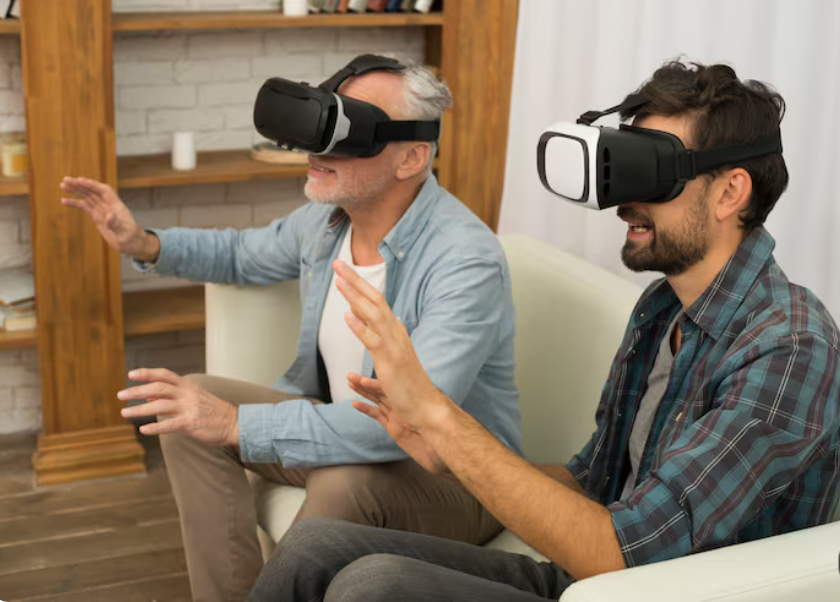
Virtual reality offers an exciting environment for advanced haptic technology because its primary objective is to make users feel physically present within digital spaces.
Traditional VR experiences rely heavily on visual immersion and motion tracking. However, the inability to feel virtual objects can weaken the illusion of presence.
Haptic gloves, wearable suits, and specialized accessories aim to address this challenge by reproducing selected sensations associated with touch and movement.
For example, users interacting with a virtual object may experience pressure or resistance through specialized gloves. Similarly, wearable feedback devices can simulate directional impacts or environmental effects.
Although current technologies cannot perfectly recreate every physical sensation, continued improvements are making virtual interactions more natural.
Applications Beyond Gaming
The benefits of haptic realism extend into several industries.
Medical Training: Simulated procedures can incorporate force feedback to help trainees practice precise movements and understand resistance during virtual operations.
Automotive Technology: Haptic steering systems, touch controls, and driver alerts can communicate important information without requiring constant visual attention.
Education: Interactive simulations can use tactile feedback to make certain learning activities more engaging and practical.
Industrial Training: Workers can practice equipment operations and technical procedures in controlled virtual environments.
Accessibility: Carefully designed tactile signals can communicate navigation cues, notifications, and other information through touch.
These applications demonstrate how haptic feedback can improve both entertainment and practical human-computer interaction.
Challenges Facing Haptic Realism
Despite its potential, advanced haptic technology still faces important limitations.
Developing highly accurate feedback systems requires sophisticated hardware, efficient software, and considerable investment. Wearable devices must balance performance with comfort, weight, battery life, and affordability.
Another challenge involves consistency. Different users may interpret tactile sensations differently, making universal feedback design difficult.
Developers must also ensure that feedback enhances an experience without becoming distracting or uncomfortable.
Addressing these challenges will be essential for making sophisticated haptic systems accessible to broader audiences.
The Future of Haptic Feedback Technology
The future of haptic realism will likely involve greater precision, improved wearable designs, and closer integration with emerging immersive technologies.
Advances in artificial intelligence could help generate adaptive tactile patterns based on virtual interactions. Meanwhile, improvements in materials and actuator technology may enable smaller, lighter, and more responsive devices.
As augmented reality, virtual reality, and mixed-reality platforms evolve, realistic tactile feedback could become an increasingly important part of digital interaction.
Rather than simply watching virtual experiences, users may gain more opportunities to physically engage with them.
Conclusion
Haptic realism represents an important step toward more immersive and interactive digital experiences. By transforming virtual events into meaningful physical sensations, next-generation feedback engines are helping bridge the gap between digital environments and human perception.
From gaming and virtual reality to healthcare, education, and industrial training, advanced haptic systems offer possibilities for more natural interaction.
As technology continues to develop, the sense of touch may become just as important as sight and sound in shaping the next generation of immersive experiences.
Read More : The Architecture of Difficulty: Balancing Challenge and Accessibility in Game Design
