
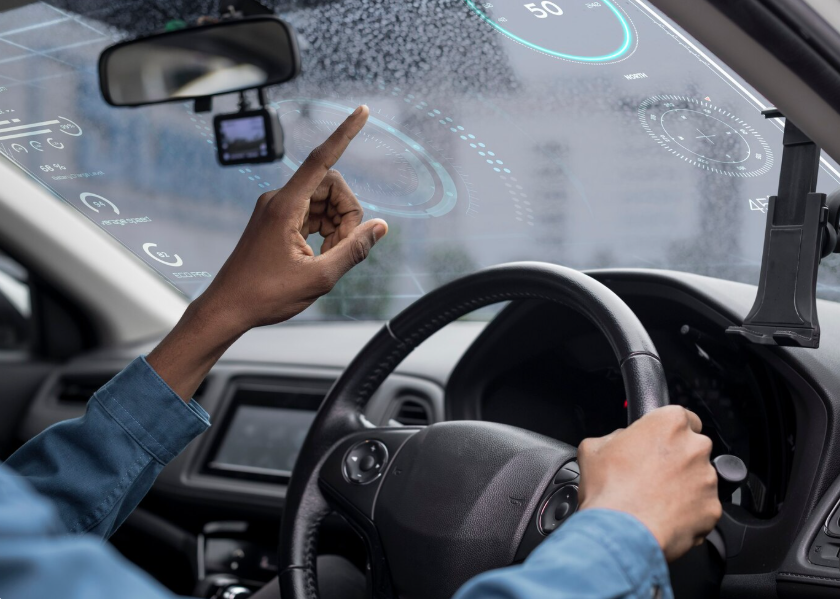
Introduction
The automotive industry is entering a revolutionary era as artificial intelligence transforms how vehicles operate. Self-driving cars promise safer roads, fewer human errors, and greater transportation convenience. However, these technological advancements introduce a complicated legal question: Who is responsible when an autonomous vehicle causes an accident?
Traditional traffic laws generally focus on human drivers, but autonomous vehicles challenge this approach by transferring driving decisions to sophisticated software systems. As AI-powered transportation develops, lawmakers, manufacturers, insurers, and consumers must reconsider how accident liability should be determined.
Understanding Autonomous Vehicle Liability
Autonomous vehicle liability refers to the legal responsibility assigned when a self-driving vehicle causes injury, property damage, or other losses.
Unlike conventional automobiles, autonomous vehicles rely on cameras, sensors, radar, and artificial intelligence algorithms to interpret their surroundings and make driving decisions.
The level of automation plays a crucial role in determining liability. The Society of Automotive Engineers classifies vehicle automation into six levels, ranging from Level 0, involving no driving automation, to Level 5, representing complete automation.
At Level 2, drivers must continuously supervise the system. At Level 3, the vehicle handles driving under specific conditions, but a human must be available to take control when requested. Level 4 systems can drive without human intervention within defined operating conditions. NHTSA+1
These distinctions influence how responsibility may be assigned after an accident.
Who Can Be Held Responsible for Autonomous Vehicle Accidents?
1. The Human Driver
Even when a vehicle includes advanced automation, the human driver may remain legally responsible for certain accidents.
For example, if a driver ignores warnings, misuses an assistance feature, or fails to supervise a system that requires constant attention, their actions could contribute to a collision.
However, responsibility becomes more complicated when a vehicle operates in a legally recognized self-driving mode without requiring human supervision.
2. The Vehicle Manufacturer
Automobile manufacturers may face liability when an accident results from defective vehicle design, faulty sensors, manufacturing problems, or inadequate safety mechanisms.
Suppose a self-driving car fails to recognize a pedestrian because of a defective detection system. If investigations establish that a product defect contributed to the collision, the manufacturer could face a product liability claim.
Manufacturers must therefore prioritize rigorous testing, safety validation, and reliable system performance.
3. The AI Software Developer
Artificial intelligence software makes decisions involving speed, navigation, braking, and obstacle avoidance.
If a software defect causes dangerous behavior, the developer or another responsible product supplier may face legal scrutiny.
For instance, an autonomous vehicle might incorrectly interpret traffic signals or fail to respond appropriately to an unexpected road hazard.
Establishing responsibility requires examining whether the software contained a defect, whether that defect caused the accident, and which parties are legally accountable.
4. Fleet Operators and Vehicle Owners
Companies operating autonomous taxis, delivery vehicles, or commercial transportation fleets may also have legal responsibilities.
These responsibilities can include maintaining vehicles, installing necessary updates, following operational restrictions, and ensuring compliance with safety requirements.
If an operator neglects essential maintenance and that failure contributes to an accident, the company could face liability depending on applicable law.
The Challenge of Proving Fault in AI-Driven Accidents
Determining fault in conventional accidents often involves examining driver behavior, road conditions, and traffic regulations.
Autonomous vehicle investigations introduce additional technical challenges.
Investigators may need to analyze sensor recordings, vehicle operating logs, software versions, system alerts, and the decisions made by automated driving technology.
Another significant challenge is establishing causation. An accident might involve several contributing factors, including a software defect, poor maintenance, unexpected road conditions, or another road user’s behavior.
Consequently, responsibility may be shared among multiple parties rather than assigned to one individual or company.
How Insurance Companies Are Adapting
Autonomous driving technology is also changing the automotive insurance landscape.
Traditional insurance policies often emphasize human driving behavior. As automated systems take greater control, insurers must increasingly consider manufacturer defects, software performance, cybersecurity risks, and commercial fleet operations.
Future insurance arrangements may involve greater coordination between vehicle owners, manufacturers, technology providers, and insurers.
However, compensation rules vary across jurisdictions, and an insurance company’s obligation to pay does not necessarily determine which party ultimately bears legal responsibility.
How Governments Are Addressing Autonomous Vehicle Liability
Governments are developing legal frameworks to address the growing complexity of automated transportation.
In the United States, federal vehicle safety oversight operates alongside state laws governing areas such as accident liability and insurance.
The United Kingdom’s Automated Vehicles Act 2024 establishes a framework that places responsibility for authorized self-driving behavior on designated corporate entities rather than automatically treating the human occupant as the driver. Legislation.gov.uk+1
Meanwhile, the European Union’s revised Product Liability Directive explicitly recognizes software, including AI systems, as products for liability purposes. Its implementation is intended to modernize protections involving defective digital technologies. EUR-Lex+1
These developments demonstrate how legal systems are adapting to vehicles that increasingly make decisions independently.
The Role of Cybersecurity in Autonomous Vehicle Responsibility
Cybersecurity introduces another dimension to autonomous vehicle liability.
Connected vehicles depend on digital communication, software updates, and electronic control systems. Security vulnerabilities could potentially allow unauthorized interference with vehicle operations.
If a cyberattack contributes to an accident, investigators may examine whether manufacturers and operators implemented appropriate security protections.
Establishing liability would require evaluating the attack, the security measures involved, and the legal duties of the affected parties.
The Future of Liability in an Autonomous World
As autonomous transportation becomes more sophisticated, legal responsibility will likely depend increasingly on how much control the automated system exercises.
Clearer regulations, accessible accident data, improved safety standards, and transparent technical investigations will be essential.
Manufacturers may need to demonstrate that their systems operate safely, while fleet operators must maintain compliance with applicable requirements.
At the same time, consumers will need accurate information about what their vehicles can and cannot do.
Conclusion
Autonomous vehicles represent a major transformation in modern transportation, but determining legal responsibility remains one of their greatest challenges.
When an AI-driven vehicle causes an accident, liability may involve the human driver, automobile manufacturer, software developer, fleet operator, or multiple parties.
The answer depends on the vehicle’s automation level, the cause of the accident, and the laws governing its operation.
As self-driving technology progresses, effective liability frameworks will be essential for protecting accident victims, encouraging responsible innovation, and building public confidence in automated transportation.
Read More : Feline Enrichment Strategies: Transforming Indoor Spaces for Cat Instincts
Do you like this personality?