
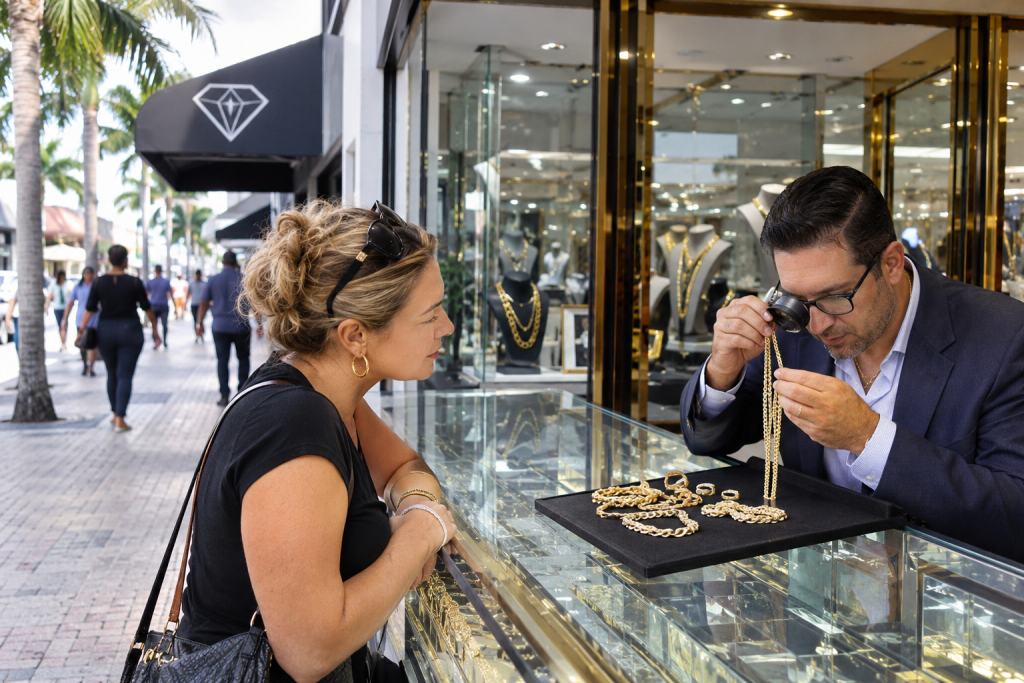
If you’ve got old gold jewelry sitting in a drawer somewhere, you’re not alone. Broken chains, mismatched earrings, rings from relationships long over—most of us have a small stash of gold we never wear. The Miami Diamond District has long been a go-to spot for people looking to turn that unused gold into cash, but walking into the district without knowing what to look for can feel overwhelming. Here’s a practical guide to help you figure out who’s actually worth your time.
Why the Miami Diamond District Draws So Many Sellers
Located along Flagler Street in downtown Miami, the sell gold jewelry in the Miami Diamond District is a dense cluster of jewelers, gold buyers, and pawn shops that has operated for decades. Because so many buyers compete in one small area, prices tend to stay more competitive than they would at a single standalone store in the suburbs. That competition works in your favor, but only if you know how to use it.
The downside is that not every buyer in the district operates with the same level of transparency. Some shops rely on customers not knowing the current market value of gold, and they’ll offer a price well below what the gold is actually worth. That’s why doing a little homework before you walk in makes a real difference.
Know the Price of Gold Before You Walk In
Gold prices change daily based on the market, and they’re measured per gram or per ounce depending on the buyer. Before heading to the district, check the current spot price online. This number is your baseline. Any offer you receive should make sense relative to that number once you account for the karat weight of your piece and the buyer’s margin.
Keep in mind that buyers don’t pay full spot price—they need to make a profit, cover refining costs, and account for risk. A fair offer usually lands somewhere between 70 and 85 percent of the melt value, depending on the purity and condition of the piece. If someone offers you significantly less, that’s a sign to keep shopping around.
What Separates a Trustworthy Buyer From the Rest
A few things tend to separate reliable gold buyers from ones that aren’t worth your trust:
They test your gold in front of you. A legitimate buyer will use an acid test, electronic tester, or XRF machine right there at the counter, not in a back room where you can’t see what’s happening.
They explain their math. If you ask how they arrived at a number, a trustworthy buyer can walk you through the weight, the karat, and the current price they’re using. If someone gets vague or defensive when you ask questions, that’s worth noting.
They don’t pressure you. A good buyer gives you time to think, compare offers, or walk away. High-pressure sales tactics are a red flag in any industry, and gold buying is no exception.
They’re licensed and established. Miami, like most cities, requires dealers who buy precious metals to hold proper licensing. Shops that have been in the district for years and have a visible storefront tend to be more accountable than pop-up buyers.
Getting Multiple Quotes Is Worth the Extra Time
Because the district has so many buyers within walking distance of each other, it’s worth visiting more than one shop before deciding. Prices can vary more than people expect—sometimes by a meaningful margin on the same item. Bring your jewelry to two or three places, write down each offer, and compare them side by side. This small step often ends up being the difference between a mediocre deal and a genuinely good one.
It also helps to separate your pieces by type before you go. Scrap gold, broken jewelry, and pieces with gemstones are often valued differently. Some buyers specialize more in one category than another, so a shop that gives you a strong offer on a plain gold band might not be the best place to sell a diamond-studded piece.
Documentation and Appraisals Can Help
If you have appraisal paperwork, original receipts, or certificates for any of your pieces, bring them along. This is especially useful for items with gemstones or designer markings, since it gives the buyer—and you—a clearer picture of value beyond just the gold weight. Even without paperwork, a reputable buyer should be willing to give you a written receipt detailing the weight, purity, and price paid for your transaction.
Selling Smart, Not Fast
It’s tempting to take the first offer just to get it over with, but a little patience usually pays off. Take your time to compare a few buyers, ask questions, and make sure you understand how your offer was calculated. Many people who want to sell gold jewelry in the Miami Diamond District find that checking a few shops first leads to noticeably better outcomes than settling on the first door they walk through.
For those who prefer working with an established name rather than navigating the district shop by shop, there are jewelers in the area who buy and sell luxury jewelry in Miami with more transparent pricing practices and a longer track record in the business.
Final Thoughts
Selling gold doesn’t have to be complicated, but it does require a bit of preparation. Know the current gold price, get multiple quotes, ask questions about how offers are calculated, and don’t let anyone rush your decision. The Miami Diamond District has plenty of reputable buyers—you just have to take the time to find them.
Read more: Psychological Biases in Trading: How to Outsmart Your Own Financial Instincts