
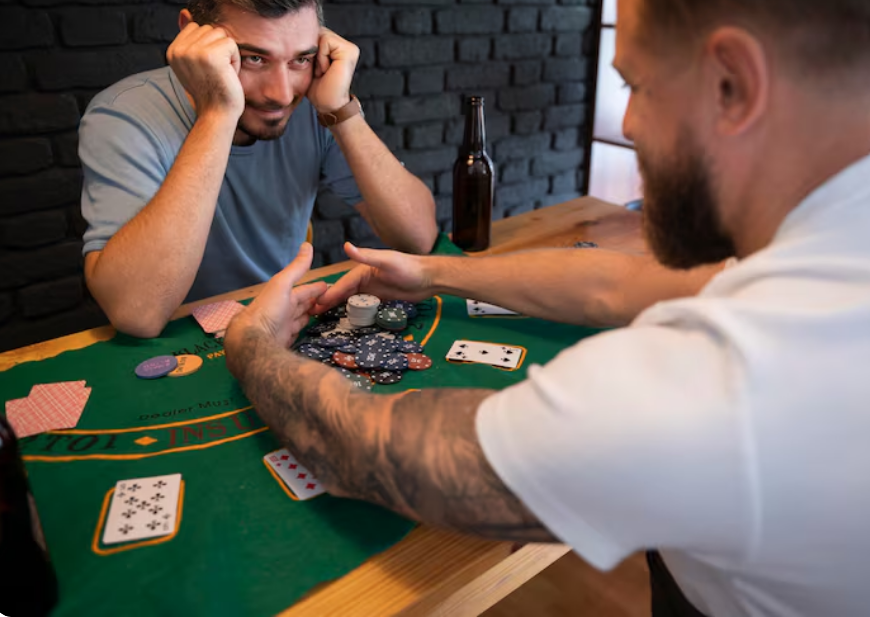
The dealer announces “no more bets,” and the table changes character. Hands withdraw from the layout. A conversation trails off. Several pairs of eyes follow the same small ball as it circles above the numbered pockets. For a few seconds, strangers share a precise point of attention. Then the ball settles, and that temporary unity breaks into different reactions: delight, disappointment, relief or a quiet nod towards someone across the felt.
This ability to gather individual decisions around one unfolding event gives roulette a distinctive place in the kasino experience. Each player brings a separate stake and expectation, but everyone watches the same result arrive. The table becomes a small social setting with its own rhythm, etiquette and brief exchanges between people who may never have spoken otherwise.
“No more bets” creates a common moment
Before betting closes, attention is scattered. One player studies the layout, another counts chips, and someone else asks the dealer a question. People occupy the same table while working through different decisions.
The closing announcement draws a boundary around those actions. Once betting has ended, the remaining task is to watch.
From an experiential design perspective, that transition matters. It gives the table a shared sequence: an opportunity to participate, a period of anticipation and a result. Nobody needs a personal introduction to understand what the surrounding group is waiting for.
The announcement also gives the dealer an essential role in coordinating attention. Clear procedure helps a collection of strangers follow the same event without needing to negotiate its timing themselves.
One number produces several stories
A roulette result is shared, but its meaning differs from player to player.
The same number might complete one person’s straight-up bet, satisfy another’s colour selection and lose a third person’s wager. Someone watching without a stake may simply enjoy the reaction.
This mixture creates much of the table’s social texture. A cheer can draw a smile from someone who did not win. A disappointed glance can be understood without explanation. Two players who backed the same number suddenly have something specific in common.
Such moments need not create lasting friendship to feel significant. A brief exchange—“You had that too?”—can turn anonymous proximity into recognition.
That is roulette’s particular form of sociability: a common event supplies the opening line.
The dealer gives the gathering structure
The dealer occupies a position between the mechanism and the people watching it. Announcements, result confirmation and settlement organise what could otherwise become a confusing collection of movements and reactions.
That structure helps make participation socially legible. Players can see when a round is open, when their decisions are closed and when the outcome has been established.
A composed presentation also leaves room for human response. A short acknowledgement of a winning selection or a clear answer to a rules question can make the table easier to follow without turning the dealer into a source of predictions.
The distinction is important. Professional presentation supports understanding and atmosphere; it cannot change the probabilities of the next spin.
Spectators belong to the scene
Roulette’s social appeal extends beyond the people placing chips.
A spectator can follow the ball, recognise a winning reaction and participate in conversation without making a financial commitment. The central action is visible enough to hold attention before someone understands every betting option.
This gives the table a quality familiar from other public spectacles: people can gather around an event before deciding how closely to engage with it.
Slot play can also involve companions and shared reactions, so the difference is not absolute. Roulette’s distinctive feature is that a single round naturally gives several people the same immediate object of attention.
The wheel provides a focal point. The surrounding people provide interpretation, humour and response.
Shared excitement can influence individual choices
The same atmosphere that makes the table sociable can also affect judgement.
A large reaction may make a particular winning result seem more representative than it is. A confident neighbour may attract attention to their selections. A lively group may make leaving feel like stepping away before something memorable happens.
None of those impressions supplies information about where the ball will land next.
Recognising that boundary allows the social experience to remain enjoyable without allowing the crowd to set a personal budget. Another player’s chip stack does not establish an affordable stake, and their enthusiasm does not create an obligation to join the next round.
Belonging at the table should not depend on matching someone else’s spending.
What happens when the table moves online?
The communal element changes when roulette is accessed through a screen.
A live-dealer format may provide a shared broadcast and, where supported, a chat function. A computer-generated version may centre primarily on the individual player’s interaction. Anyone browsing online roulette should check the particular game’s description rather than assume that every version includes a live dealer or conversation with other players.
The design challenge is to preserve understandable timing and a sense of presence. On a physical floor, people read gestures, hear nearby reactions and see who is following the same spin. A screen must communicate through a narrower selection of visual and audio cues.
For adults using the kasino download link, the destination is Betika Tanzania’s broader betting application. Its Google Play listing advertises casino games and carries an adults-only, 18+ rating.
The device provides access; the individual game format determines how much of the table’s shared experience accompanies it.
The gathering is part of the product
For adults exploring an online kasino, roulette offers a useful reminder that an experience includes more than rules and payouts. Timing, presentation and opportunities for interaction all shape how participation feels.
On a kasino floor, the operator provides the conditions for those encounters: a visible focal point, a clearly managed sequence and space for people to respond together.
The memorable moment may be a winning number, but it may also be the stranger who recognised it at exactly the same instant. Roulette’s communal magnetism begins there—in several separate lives briefly following one small ball, then finding something to say when it stops.