
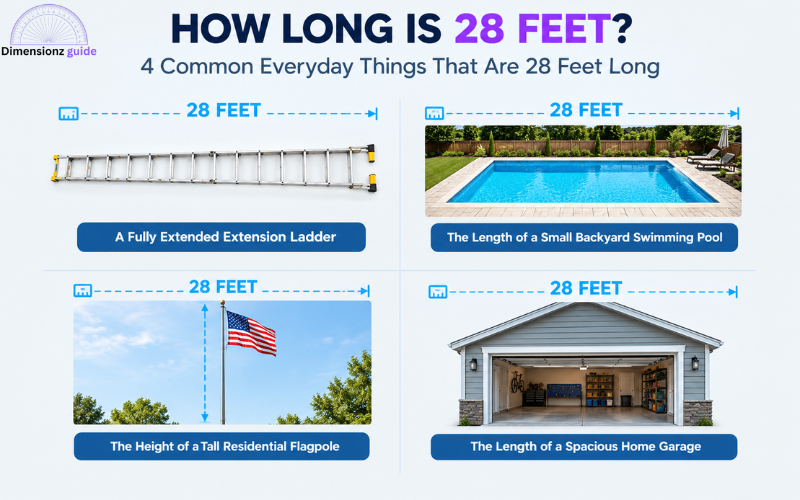
How long is 28 feet? 28 feet is equal to 336 inches, 8.53 meters, or 853.44 centimeters. It is a considerable length, roughly comparable to the length of a large recreational space or a long extension ladder fully extended. To visualize 28 feet, imagine a measurement that stretches across a large room, along part of a garden, or across a spacious outdoor area.
Understanding this length becomes much easier when you compare it with familiar objects and spaces. Although 28 feet might be difficult to estimate by looking at an empty area, everyday examples can help you picture it more clearly. The exact dimensions of these examples vary, but they provide useful references for understanding the measurement.
In this guide, you will learn how long 28 feet is, how to convert it into other units, and how nine real-life examples can help you visualize this length without relying entirely on a measuring tape.
How Long Is 28 Feet?
28 feet is equal to 336 inches or 8.5344 meters. It is also approximately 853.44 centimeters long.
Quick conversion: 1 foot equals 12 inches or 0.3048 meters.
28 Feet in Different Units
Before comparing 28 feet with everyday objects, it helps to understand how this measurement relates to other commonly used units. Feet are frequently used to describe room dimensions, building heights, outdoor spaces, and the lengths of larger objects.
Here is a quick conversion table for 28 feet.
| Unit | Equivalent measurement |
| Feet | 28 feet |
| Inches | 336 inches |
| Yards | 9.33 yards |
| Meters | 8.53 meters |
| Centimeters | 853.44 cm |
| Millimeters | 8,534.4 mm |
These conversions make it easier to understand 28 feet in different measuring systems. For example, if a product or space is described as being 8.53 meters long, you now know that it is approximately 28 feet.
In the United States, feet and inches are commonly used for construction, home improvement, and property measurements. In countries that use the metric system, meters and centimeters may be more familiar. Knowing both systems helps you understand dimensions regardless of how they are presented.
What Does 28 Feet Look Like?
Twenty-eight feet is longer than many household rooms and much longer than most furniture items. It is approximately the length of nine adult steps if each step covers about 3 feet, although actual walking steps vary considerably.
You can also picture 28 feet as a long outdoor area stretching from one end of a garden to another. In a large home, it might represent the length of an open-plan living area or a spacious garage.
Another way to visualize this distance is to imagine placing four objects measuring 7 feet each end to end. Together, they would cover exactly 28 feet. This comparison works particularly well when estimating longer distances because it divides the measurement into smaller, more manageable sections.
Remember that visual comparisons are useful for estimation, but they cannot replace accurate measurements when you need to purchase materials, plan a building project, or determine whether an object will fit in a particular space.
Why Understanding 28 Feet Matters
Knowing how long 28 feet is can help in many practical situations. You might need to estimate the dimensions of a backyard, plan an outdoor gathering area, determine the approximate height of a tree, or check whether a large item will fit in an available space.
This measurement can also be useful when reviewing construction plans or comparing the dimensions of different properties. For example, knowing the difference between 20 feet and 28 feet can help you recognize how much additional space a longer area provides.
Understanding larger measurements is especially useful because judging them by sight alone can be difficult. Comparing 28 feet with familiar objects gives you a starting point and helps you make more informed estimates before taking an exact measurement.
Related Post: 10 Common Everyday Things That Are About 27 Feet Long
9 Real-Life Examples of 28 Feet (Simple Everyday Comparisons)
Understanding 28 feet becomes easier when you compare it with recognizable objects and spaces. The following nine examples cover outdoor equipment, household spaces, and other familiar structures that can help you visualize this length.
Keep in mind that the dimensions of real objects vary by model, design, and location. These comparisons are intended to help you develop a practical sense of the measurement rather than suggest that every example is exactly 28 feet long or tall.
1. A Fully Extended Extension Ladder
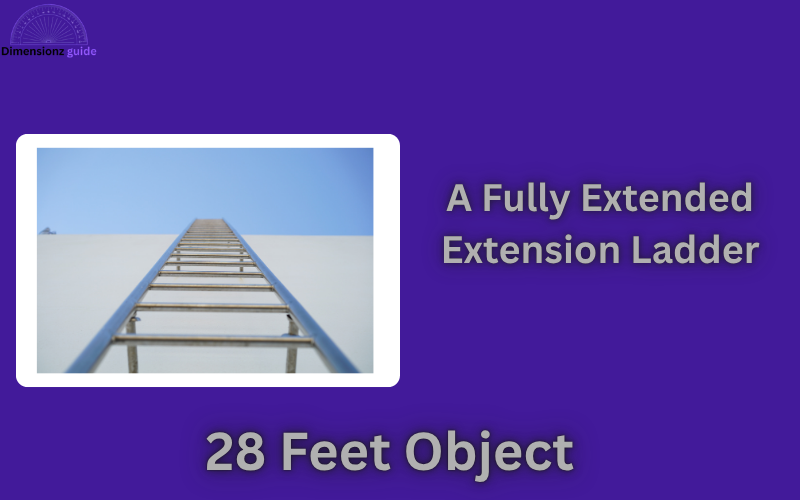
Approximate comparison: Some large extension ladders are designed for extended lengths in the 28-foot range.
A large extension ladder is a useful way to picture a length of 28 feet. These ladders are commonly used for exterior maintenance, painting, and reaching elevated areas around buildings. Depending on the model, a ladder may have an advertised length close to 28 feet when its sections are extended.
It is important to distinguish the ladder’s overall length from its vertical reach. When a ladder is leaned against a wall at the recommended angle, its horizontal and vertical dimensions will be different from its full length. Therefore, a 28-foot ladder does not normally reach 28 feet straight up when positioned for use.
To visualize the measurement, imagine the ladder laid out along the ground with its sections fully extended. Its length would cover a substantial portion of a driveway or yard. This example is especially helpful because a ladder provides a long, narrow reference that is easy to compare with a measured distance.
2. The Length of a Small Backyard Swimming Pool

A small backyard swimming pool can provide another helpful comparison for 28 feet. Residential pools come in many shapes and sizes, and some rectangular designs are built with lengths around 28 feet. This makes a pool of that size a practical example of how far the measurement extends.
Imagine standing at one end of such a pool and looking toward the opposite end. The water would stretch across a distance of approximately 28 feet, giving you a clear sense of the measurement. The pool’s width would be a separate dimension, so it is important not to confuse the two when estimating its overall size.
This comparison is useful when planning outdoor spaces, choosing a pool design, or understanding property layouts. A pool of this length needs room not only for the water itself but also for access and any surrounding deck or walking area.
Actual pool dimensions vary, so checking the manufacturer’s specifications or measuring the pool directly is the best way to confirm whether a particular model is 28 feet long.
3. The Height of a Tall Residential Flagpole
A tall residential or institutional flagpole can help you visualize 28 feet vertically rather than horizontally. Flagpoles are installed outside homes, schools, community buildings, and commercial properties. Some smaller outdoor flagpoles have heights close to this measurement.
Imagine looking upward at a flagpole that stands 28 feet tall. Its top would be well above the roofline of many single-story homes, although the exact comparison depends on the building. This gives you a useful idea of how much vertical distance 28 feet represents.
Flagpoles also demonstrate why it is important to distinguish height from length. A pole that measures 28 feet from its base to its tip occupies a vertical distance, whereas a 28-foot ladder lying on the ground occupies a horizontal distance.
This example can be particularly helpful when estimating the height of outdoor structures or understanding the dimensions shown in landscaping and building plans. However, the visible height of an installed flagpole may differ from its total length if part of it is set below ground.
4. The Length of a Spacious Home Garage
A large residential garage can be close to 28 feet long, depending on its design and intended use. Garages vary widely, with some built mainly for one vehicle and others providing additional room for storage, workbenches, bicycles, and household equipment.
Imagine walking from the garage door toward the back wall of a garage that measures 28 feet from front to rear. That distance would provide a substantial area for parking and moving around, especially if the garage were also designed with useful storage space.
This comparison is helpful when planning home improvements or deciding whether a garage has enough room for a particular vehicle. A vehicle’s length is only one consideration; you also need clearance for opening doors, walking around it, and accessing stored items.
Garage dimensions are not standardized across every property. Some are shorter, while others are significantly longer. If you are evaluating a particular garage, measure the usable interior distance rather than relying on the outside dimensions of the building.
5. The Length of a Long Garden Shed
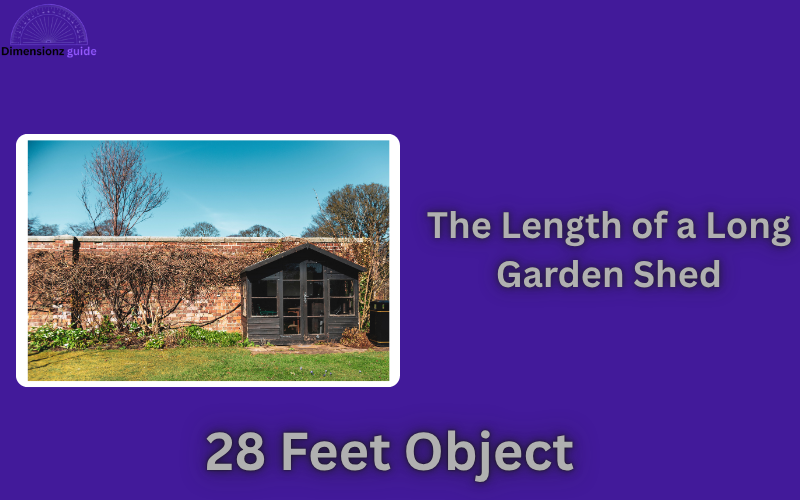
A long garden shed can also help illustrate a distance of 28 feet. While many backyard sheds are much smaller, larger storage buildings may be designed with lengths approaching this measurement. These structures can provide space for gardening equipment, outdoor furniture, tools, and seasonal supplies.
Picture a shed extending 28 feet along one side of a garden. Walking from one end to the other would cover the same distance as a 28-foot measurement. This makes the example easy to imagine even if you have never measured a structure of that size yourself.
The comparison is especially useful for people planning outdoor storage or considering how much space a larger shed would occupy. A building of this length needs sufficient ground space, and its placement may affect access paths, landscaping, and the arrangement of other garden features.
Not every garden shed is 28 feet long, so the dimensions should be treated as an illustrative example. Checking the listed length and width is essential when buying a prefabricated shed or preparing a foundation.
6. The Length of a Large Outdoor Dining Area
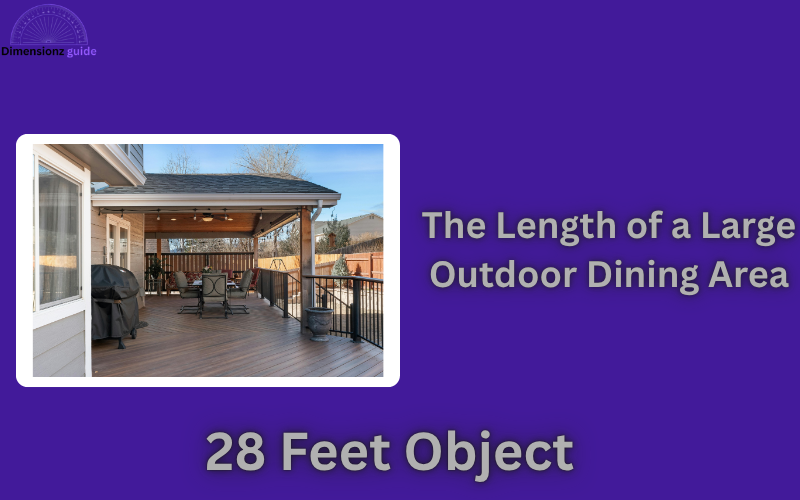
A long outdoor dining area can provide a practical way to visualize 28 feet. Some patios and entertaining spaces extend for approximately this distance, allowing room for a dining table, chairs, and additional walking space. The actual layout depends on the available property and how the area is designed.
Imagine measuring from one end of a spacious patio to the other and finding a length of 28 feet. You could then use that measurement to plan where to position furniture or how much space to leave around a dining table. The overall length is only one part of the layout because the width also determines how comfortably people can move around.
This comparison is useful when arranging outdoor furniture, planning a barbecue area, or evaluating a patio renovation. It shows how a relatively large measurement can relate to an everyday living space rather than an unfamiliar technical object.
Keep in mind that a 28-foot patio does not necessarily need to be one uninterrupted rectangle. Its shape may include corners, steps, or separate sections, so the usable dimensions should be considered when planning furniture placement.
7. The Height of a Mature Palm Tree
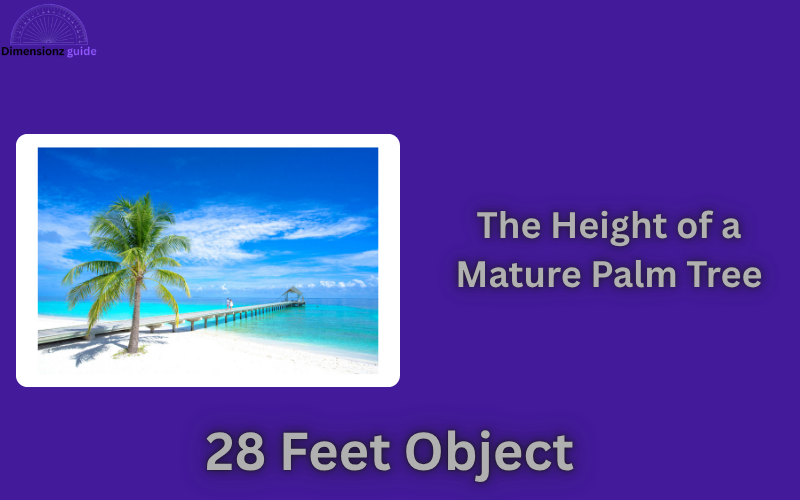
A mature palm tree can sometimes reach a height of around 28 feet, depending on its species, age, and growing conditions. Palm trees are found in gardens, parks, streets, and landscaped outdoor spaces, making them a recognizable reference for understanding vertical measurements.
Imagine standing near a palm tree whose top reaches 28 feet above the ground. Looking from the base to the highest visible point helps you appreciate how much vertical space this measurement represents. A tree of this height may stand noticeably above nearby fences and smaller garden plants.
This comparison is particularly useful for landscaping and garden planning. Tree height can affect shade, the appearance of a property, and the clearance needed around nearby structures. It can also help you estimate the scale of a tree when viewing a property or outdoor area.
However, palm trees vary considerably in size, and not every mature palm reaches 28 feet. Some species remain relatively short, while others grow much taller. If exact height matters for pruning, landscaping, or construction, use a reliable measurement rather than estimating from appearance alone.
8. The Length of a Long Classroom
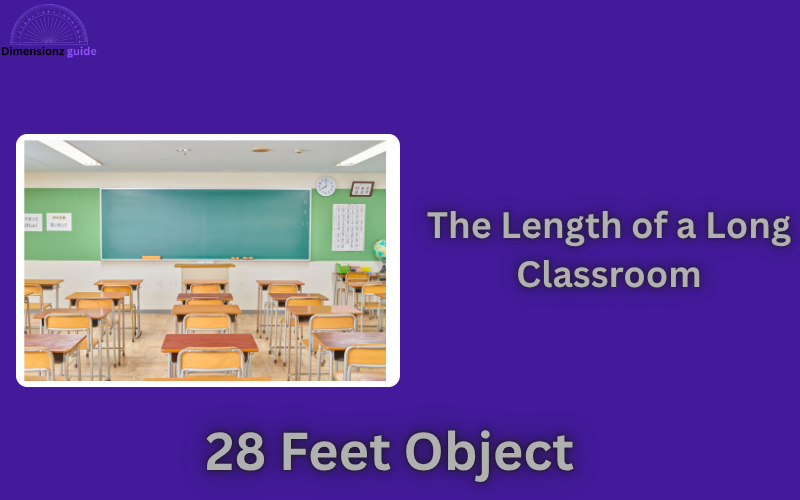
A large classroom or training room may have a length approaching 28 feet. Educational buildings are designed in different sizes to accommodate different numbers of students, furniture arrangements, and teaching activities. Some larger rooms provide enough space for several rows of desks and a clear route through the room.
Imagine standing beside the entrance and looking toward the opposite end of a classroom that measures 28 feet long. The distance would provide a helpful visual reference for the size of the room. Depending on the width, the classroom might accommodate desks, chairs, a teaching area, and storage without feeling as confined as a smaller room.
This comparison can be useful when planning furniture layouts, arranging a training session, or estimating the amount of flooring needed for a room. It also helps you understand that 28 feet can be a substantial indoor dimension, not just a measurement used outdoors.
Classroom sizes vary according to building design and local requirements. A room’s length should therefore be checked directly if you need accurate measurements for flooring, renovations, or furniture placement.
9. The Length of a Large Outdoor Clothesline
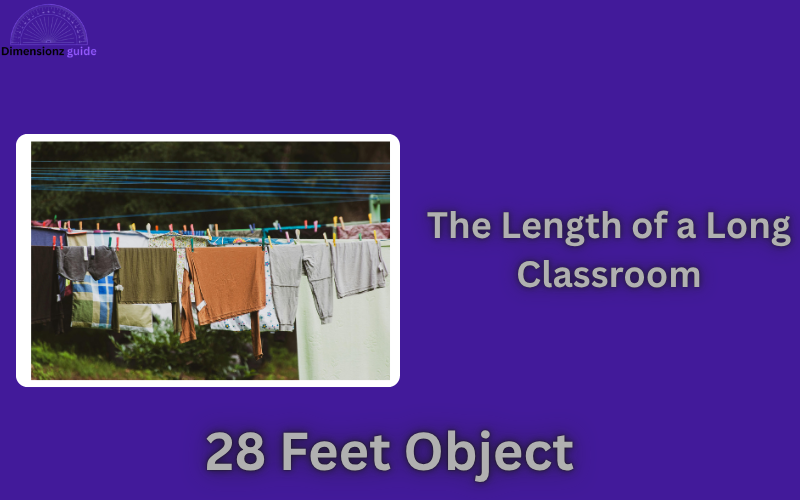
A long outdoor clothesline can provide a simple household comparison for a distance of 28 feet. Clotheslines are used to dry laundry in backyards, gardens, and other outdoor spaces. Some installations have a long span between their supports, while others use several shorter sections.
Imagine a straight clothesline extending 28 feet from one support to another. Its length would give you a clear idea of the distance, especially if you have a yard where you can walk alongside it. You could use this comparison to estimate how much room is available for hanging laundry or arranging an outdoor drying area.
A clothesline’s total length may differ from the distance between its supports. Some lines run through several pulleys or change direction, so the amount of cord used can be greater than the straight-line distance across the yard.
This makes the clothesline a helpful visual reference, although it should not be treated as an exact measurement unless you have checked its length. For an accurate estimate, measure the distance between the endpoints with a tape measure.
28 Feet in Daily Life
A length of 28 feet can appear in a wide range of practical situations, including home design, landscaping, outdoor recreation, and property planning. It can describe the length of a large indoor space, the height of a tall outdoor structure, or the span of equipment designed for reaching elevated areas.
Understanding this measurement is useful when comparing dimensions before buying something or changing a space. For example, knowing that 28 feet is approximately 8.53 meters makes it easier to interpret measurements on plans that use the metric system.
It is also helpful to remember that an object’s length, height, and width are different measurements. A structure that is 28 feet tall may not be 28 feet wide, and a patio that is 28 feet long may have a much smaller width.
Using familiar comparisons gives you a starting point, while direct measurement provides the accuracy needed for practical decisions.
How to Visualize 28 Feet Without a Measuring Tape
If you do not have a measuring tape, you can still estimate 28 feet by dividing the distance into smaller sections. For example, imagine four consecutive sections, each 7 feet long. Together, these sections would cover 28 feet.
You can also use a known reference, such as a measured section of a room or an object whose dimensions are listed by its manufacturer. Repeating that reference along the distance gives you a rough estimate of the total length.
Your walking stride can be another rough guide, but it is less reliable because step lengths vary from person to person. If you use this method, estimate your usual step length first and remember that the result will not be exact.
For projects involving construction, fencing, flooring, or large purchases, always verify the distance using a suitable measuring tool.
Common Mistakes When Estimating 28 Feet
One common mistake is confusing feet with meters. Since 28 feet is approximately 8.53 meters, treating the number as 28 meters would produce a much larger distance than intended.
Another mistake is estimating a three-dimensional object using the wrong dimension. For example, the height of a flagpole cannot be used as its horizontal length, and the width of a garage does not tell you how long it is.
People also tend to underestimate long distances when viewing them from one end. Breaking 28 feet into smaller sections makes the distance easier to understand.
Finally, remember that the examples in this guide are approximate comparisons. If you need to know whether a particular object is exactly 28 feet long, check its specifications or measure it directly.
28 Feet Compared to Other Measurements
Comparing 28 feet with nearby measurements can help you understand its scale.
- 7 feet: One-quarter of 28 feet.
- 14 feet: Half of 28 feet.
- 21 feet: Three-quarters of 28 feet.
- 28 feet: The full measurement.
- 30 feet: Just 2 feet longer than 28 feet.
- 1 yard: Equal to 3 feet, so 28 feet is approximately 9.33 yards.
These comparisons show how the measurement changes as the distance increases. They can also help you estimate dimensions when you know the size of a smaller reference object.
Why Accurate Measurement Is Important
Accurate measurements are essential when planning spaces, purchasing materials, or deciding whether an object will fit in a particular location. A difference of even a few inches can matter when arranging equipment, building a structure, or planning a renovation.
For example, if you are preparing a 28-foot area for a project, you should measure the actual available space rather than relying on an estimate based on a tree or a room. You may also need to account for obstacles, clearances, and the usable dimensions of the area.
Real-life comparisons are excellent for developing a visual understanding of size, but a measuring tape or laser distance meter is a better choice when precision matters.
If you find this helpful and want more free guides like this then here we have more for you:
- 10 Common Everyday Things That Are About 27 Feet Long
- 11 Common Everyday Things That Are About 26 Feet Long
- 9 Common Everyday Things That Are About 25 Feet Long
- 10 Common Everyday Things That Are About 24 Feet Long
- 8 Common Everyday Things That Are About 23 Feet Long
FAQs
How many inches are in 28 feet?
There are 336 inches in 28 feet because each foot contains 12 inches. Multiplying 28 by 12 gives a total of 336 inches.
How many meters is 28 feet?
28 feet equals approximately 8.53 meters. This conversion is useful when reading metric measurements or comparing dimensions internationally.
Is 28 feet a long distance?
Yes, 28 feet is a substantial length for many household and indoor applications. It is longer than many rooms and large enough to describe certain outdoor spaces and structures.
How can I measure 28 feet without a tape measure?
You can estimate it by dividing the distance into smaller sections, using a known measurement as a reference, or counting your walking steps. These methods provide estimates rather than guaranteed exact measurements.
What are some examples of things that measure around 28 feet?
Examples may include certain extension ladders, residential flagpoles, backyard swimming pools, garden sheds, and large indoor spaces. Their actual dimensions depend on the design and model.
Is 28 feet the same as 9 yards?
No. Nine yards equals 27 feet, so 28 feet is 1 foot longer than 9 yards. More precisely, 28 feet is approximately 9.33 yards.
Related Post: 11 Common Everyday Things That Are About 26 Feet Long
Conclusion
So, how long is 28 feet? It is equal to 336 inches, approximately 8.53 meters, or 853.44 centimeters. This length can be easier to visualize by comparing it with a large outdoor space, a long extension ladder, a spacious garage, or other familiar structures.
These nine examples provide practical ways to picture the measurement in everyday settings. Although the dimensions of real objects vary, they help you develop a better sense of how far 28 feet extends.
Whenever accuracy matters, use a measuring tape or another suitable measuring tool to confirm the actual length. With a few familiar references and a clear understanding of unit conversions, estimating 28 feet becomes much easier.