
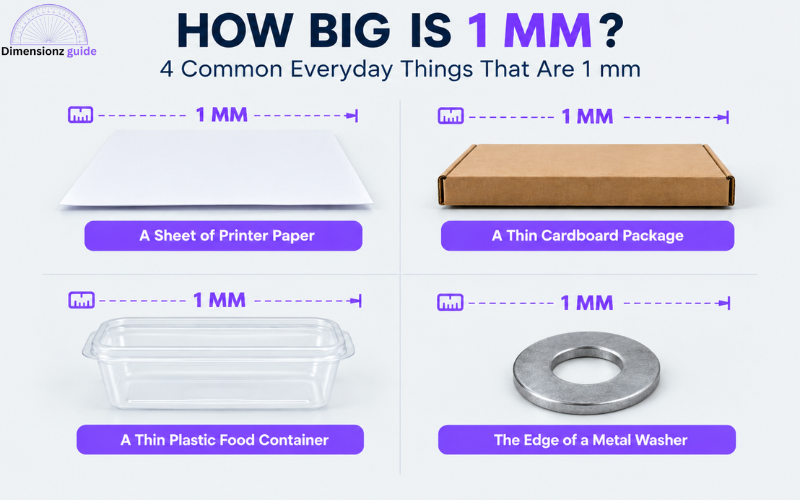
How big is 1 mm? One millimeter is a very small unit of length equal to one-thousandth of a meter, one-tenth of a centimeter, or approximately 0.039 inches. It is so small that you may not notice it easily without looking closely. However, millimeters are useful for measuring thin materials, small gaps, tiny parts, and the thickness of everyday objects. Understanding how big 1 mm is becomes easier when you compare it with familiar items around your home.
How Big Is 1 mm?
1 millimeter is a very small unit of length. It equals 0.1 centimeters or 0.03937 inches.
A millimeter is one-thousandth of a meter and one-tenth of a centimeter.
How to Visualize 1 mm Without a Ruler
Visualizing one millimeter can be difficult because many everyday objects are much larger. The easiest method is to look at items with thin edges, small openings, or closely spaced details. You can also use a metric ruler to see the distance between two neighboring millimeter marks.
Keep in mind that everyday objects are not manufactured to exactly the same dimensions. The examples below help you understand the scale of 1 mm rather than serve as precise measuring tools.
Related Post: 8 Common Everyday Things That Are About 30 Feet Long
9 Common Everyday Things That Help You Understand 1 mm
The following nine examples use familiar items and details to help you picture a millimeter. Some are larger than 1 mm, so the comparison focuses on a particular thin edge, small feature, or measurement rather than the entire object.
1. A Sheet of Printer Paper

A standard sheet of printer paper is a useful example for understanding small measurements. Typical office paper is around 0.1 mm thick, although the exact thickness depends on its weight and finish. This means that 1 mm is roughly equal to the combined thickness of ten ordinary sheets of paper.
Place several sheets together and look at their edges. The stack makes a tiny measurement easier to see than a single sheet does. This comparison is especially helpful for understanding how small a millimeter is in relation to materials used every day at home, school, and work.
2. A Thin Cardboard Package
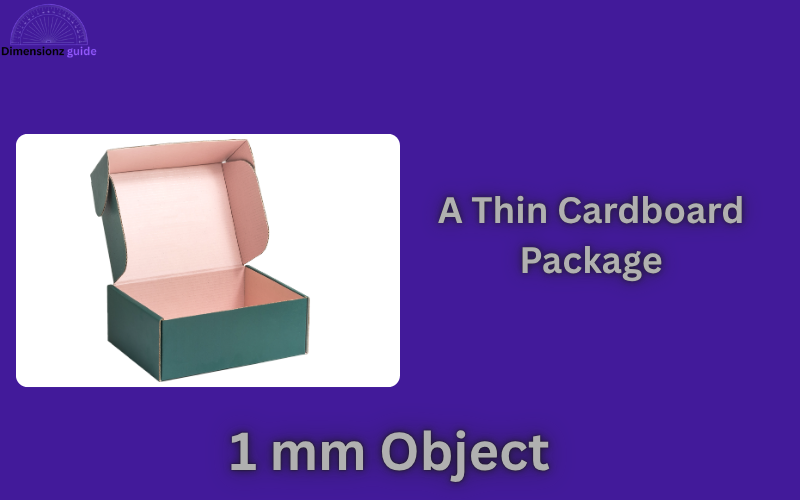
Thin cardboard used for packaging can help demonstrate the difference between fractions of a millimeter and a full millimeter. Lightweight packaging board may be less than 1 mm thick, while sturdier cardboard can be several millimeters thick. The exact size varies with the material and the way it is manufactured.
Look at the cut edge of a small product box to see how thin layers can be. If you compare different packages, you will notice that some feel almost paper-like, while others are much thicker and more rigid. A 1 mm measurement is useful when describing thin packaging materials or the narrow edges of lightweight cardboard.
3. A Thin Plastic Food Container

Some thin plastic food containers have walls that measure around a fraction of a millimeter to about 1 mm, depending on the type of plastic and the container’s design. Flexible lids and lightweight disposable containers are often thinner than rigid reusable storage containers.
Look closely at the rim or sidewall of a container rather than judging its size from the top. The edge gives you a better sense of its thickness. This is a practical comparison because thin plastic products are common in kitchens, lunch bags, and food storage areas.
4. The Edge of a Metal Washer

A small metal washer is a familiar hardware item with a central hole. Although the washer itself is usually several millimeters wide and may be more than 1 mm thick, its flat edge offers a useful way to think about precision measurements. Washers are manufactured in different sizes, so their thickness should be checked rather than assumed.
Washers are used with bolts and screws to spread pressure and help protect surfaces. In mechanical work, a difference of 1 mm can affect how parts fit together. This makes the washer a useful example of why even a very small measurement can matter when working with metal hardware.
5. A Thin Adhesive Label
The material used for an adhesive label is often very thin. A label may consist of a thin printable face, adhesive, and a backing layer, with the total thickness varying by product. Some individual layers measure well below 1 mm, while the complete label material can be thicker.
Look at the edge of a label peeled from a package. It is easy to underestimate how much material is present because the label is designed to remain flexible and lie flat against a surface. This example helps explain why millimeters are useful when describing thin films, stickers, and other lightweight materials.
6. A Thin Rubber Gasket
A rubber gasket is designed to sit between two surfaces and help create a seal. Small gaskets can have thicknesses around 1 mm, although other designs are significantly thicker. Their measurements depend on the purpose of the gasket, the material used, and the pressure the part needs to withstand.
You might find gaskets in plumbing fittings, appliances, and mechanical equipment. A difference of even 1 mm can influence whether two parts fit together properly or whether a seal works as intended. This makes a gasket a practical example of millimeter-level measurements in everyday products.
7. A Thin Metal Shim

A metal shim is a thin piece of material used to adjust spacing, alignment, or fit between two parts. Some shims are much thinner than 1 mm, while others are close to or thicker than that measurement. Their thickness is usually specified carefully because small changes can affect the position of a component.
Shims are used in repair work, machinery, and assembly tasks. For example, a technician may insert a thin shim to reduce a gap or align two surfaces. This shows how a measurement as small as 1 mm can be important even when it is difficult to judge by eye.
8. A Thin Piece of Craft Foam
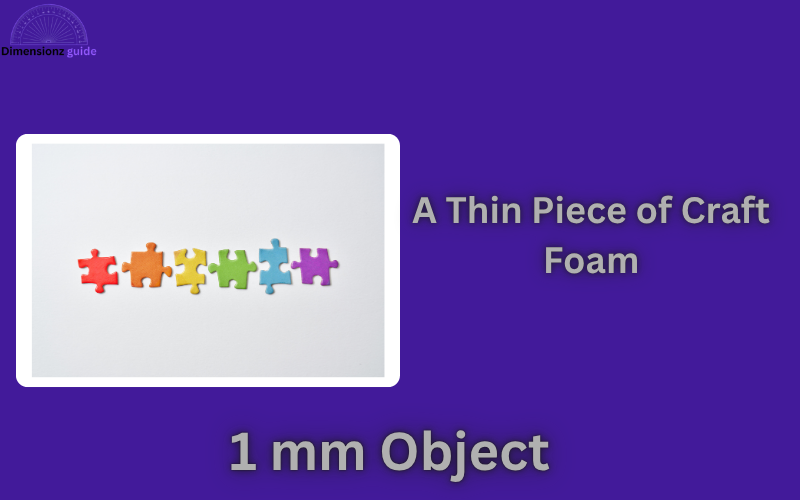
Craft foam is sold in different thicknesses, including thin sheets used for decorations, school projects, and small handmade items. Some sheets are close to 1 mm thick, while others are several millimeters thick. Checking the product specification is the best way to know its actual measurement.
Because foam can compress when pressed, it may appear thinner under pressure than it does when left untouched. This makes it an interesting comparison for understanding the difference between a material’s measured thickness and its thickness when squeezed. A 1 mm layer of foam is thin enough to bend easily but can still add a little cushioning to a craft project.
9. A Thin Layer of Dried Paint
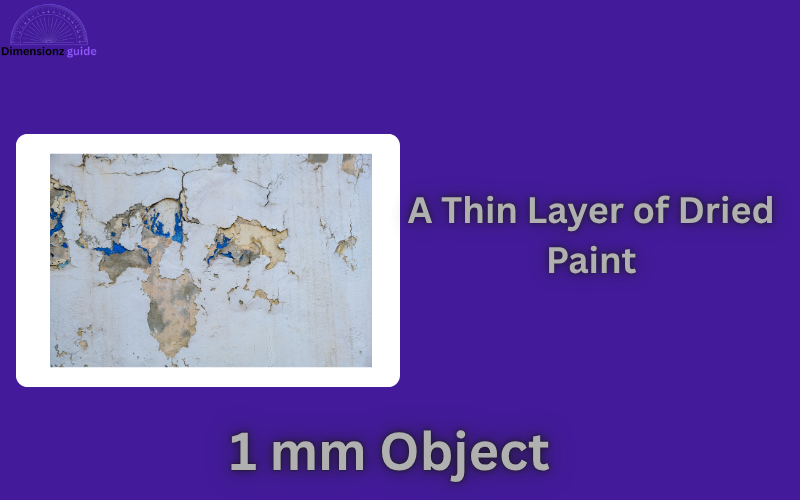
A dried coat of paint can be far thinner than 1 mm, depending on the paint type and how it is applied. Several coats may build up a greater total thickness, but an individual coat is generally too thin to estimate accurately just by looking at it.
Paint is a useful example because it shows that not every visible layer reaches one millimeter. On a painted wall, furniture, or metal surface, the coating may look solid even though its thickness is very small. This comparison helps you understand that 1 mm is a measurable amount of material, not simply a tiny amount that can be judged reliably by sight.
How Big Is 1 mm Compared With Other Measurements?
Understanding the relationship between millimeters, centimeters, and inches makes this measurement easier to use.
| Measurement | Equivalent |
| 1 millimeter | 0.1 centimeters |
| 1 millimeter | 0.03937 inches |
| 10 millimeters | 1 centimeter |
| 25.4 millimeters | 1 inch |
| 1,000 millimeters | 1 meter |
The most useful conversion to remember is that 10 mm equals 1 cm. Therefore, one millimeter is one-tenth of a centimeter. Since one inch contains 25.4 millimeters, 1 mm is also much smaller than one-tenth of an inch.
Why Is 1 mm Important in Everyday Life?
Although a millimeter is small, it is important in many practical situations. In crafts, it can describe the thickness of a sheet or the spacing between two pieces. In home repairs, it can help explain a narrow gap or the thickness of a replacement part. In manufacturing, millimeters are used to specify the dimensions of components that need to fit together accurately.
Millimeters are also useful when comparing product specifications. Items such as phone accessories, small hardware parts, plastic sheets, and mechanical fittings may have dimensions listed in millimeters. Knowing how small 1 mm is helps you interpret these measurements instead of relying only on appearance.
How to Measure 1 mm Accurately
The most reliable way to measure 1 mm is to use a metric ruler, caliper, or another suitable measuring tool. On a standard metric ruler, the smallest marked intervals are often 1 mm apart. Each small division represents one millimeter.
For greater accuracy, use digital calipers when measuring the thickness of a solid object or the diameter of a small part. A ruler may be sufficient for general comparisons, but it can be difficult to measure extremely thin materials precisely with one. Always check the tool’s markings and make sure the object is positioned correctly.
Common Mistakes When Visualizing 1 mm
One common mistake is assuming that every thin object measures exactly 1 mm. Paper, plastic, cardboard, and rubber are made in different thicknesses, so they should be treated as comparisons rather than exact standards.
Another mistake is confusing millimeters with centimeters. A centimeter is ten times as large as a millimeter, which makes the difference important when measuring small parts. It is also easy to underestimate a millimeter when looking at a large object, such as a wall or a tabletop. In precision work, a small difference can affect alignment, spacing, or fit.
If you find this helpful and want more free guides like this then here we have more for you:
- 9 Common Everyday Things That Are About 28 Feet Long
- 10 Common Everyday Things That Are About 27 Feet Long
- 11 Common Everyday Things That Are About 26 Feet Long
- 9 Common Everyday Things That Are About 25 Feet Long
- 10 Common Everyday Things That Are About 24 Feet Long
FAQs
Is 1 mm bigger than 1 cm?
No. One millimeter is smaller than one centimeter. There are 10 millimeters in 1 centimeter, so 1 mm equals 0.1 cm.
How many inches is 1 mm?
One millimeter is approximately 0.03937 inches. This is slightly less than four-hundredths of an inch.
Can you see 1 mm with the naked eye?
Yes, a 1 mm mark or gap can usually be seen under good lighting, but judging its size accurately without a measuring tool can be difficult. Fine details may be easier to see with magnification.
What is an easy way to imagine 1 mm?
Think about the thickness of a thin material or the small divisions on a metric ruler. A single sheet of printer paper is much thinner than 1 mm, so a stack of several sheets can provide a useful visual comparison.
Why do manufacturers use millimeters?
Manufacturers use millimeters because the unit makes it easier to specify small dimensions, material thicknesses, and component clearances. Accurate measurements help products fit together and function correctly.
Related Post: 10 Common Everyday Things That Are About 29 Feet Long
Conclusion
One millimeter is a very small measurement equal to 0.1 centimeters or approximately 0.03937 inches. Although it may be difficult to estimate by sight, everyday materials such as paper, thin plastic, cardboard, labels, and small hardware can help you understand its scale. These examples are useful for building a visual reference, but their exact dimensions vary.
When accuracy matters, use a metric ruler or caliper instead of relying on an everyday object. Remembering that 10 mm equals 1 cm is one of the simplest ways to understand and work with millimeters in daily life.