
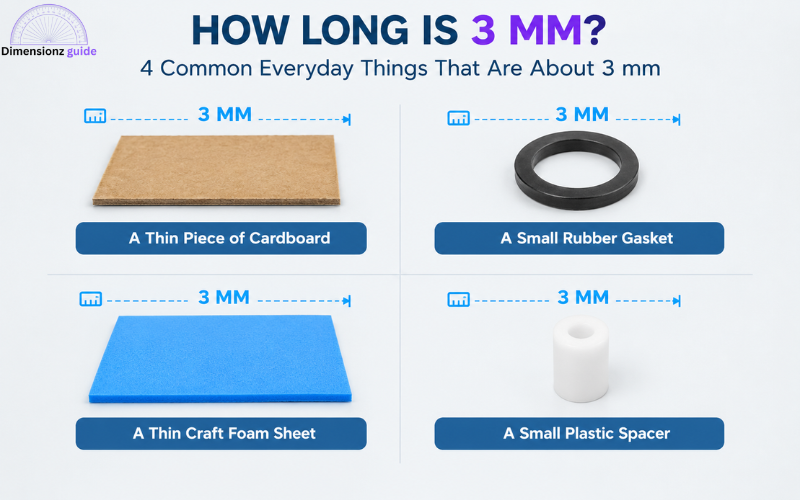
How big is 3 mm? Three millimeters is a very small measurement equal to 0.3 centimeters or approximately 0.118 inches. It is slightly less than one-eighth of an inch, making it difficult to estimate accurately without a ruler or measuring tool. Although 3 mm may seem tiny, this measurement can be found in the thickness of small materials, the size of everyday components, and the dimensions of various household items. Comparing it with familiar objects can help you understand how big 3 mm really is.
How Big Is 3 mm?
3 millimeters is equal to 0.3 centimeters, or approximately 0.118 inches.
Quick conversion: 3 mm is a very small measurement, slightly less than one-eighth of an inch.
How Big Is 3 mm?
Three millimeters is equal to 0.3 centimeters, 0.003 meters, and approximately 0.118 inches. It is a little smaller than one-eighth of an inch. Because this measurement is so small, it is easiest to visualize by looking at the thickness of thin materials or the small dimensions of common objects.
3 mm Conversion Table
| Measurement Unit | Equivalent |
| Millimeters | 3 mm |
| Centimeters | 0.3 cm |
| Meters | 0.003 m |
| Inches | 0.118 inches |
| Feet | 0.00984 feet |
These conversions make it easier to compare 3 mm with measurement systems used in different countries. If you usually measure objects in centimeters, remember that 3 mm is less than half a centimeter. In inches, it is slightly smaller than one-eighth of an inch.
What Does 3 mm Look Like?
Three millimeters is small enough that you may overlook it when examining an everyday object. It is not as large as the width of a typical fingernail or the thickness of a standard pencil. Instead, it is closer to the thickness of certain thin materials and small manufactured components.
One helpful way to picture this measurement is to imagine a line that is 3 mm wide on a ruler. The distance between the zero mark and the 3 mm mark is short, but it is still large enough to see clearly when using a ruler with millimeter markings.
Related Post: 8 Common Everyday Things That Are About 2 mm Long
10 Common Everyday Things That Are About 3 mm
Several everyday objects and materials can help you visualize a measurement of 3 mm. The examples below are approximate comparisons rather than exact standards because product dimensions can differ by brand, design, and material.
1. A Thin Piece of Cardboard
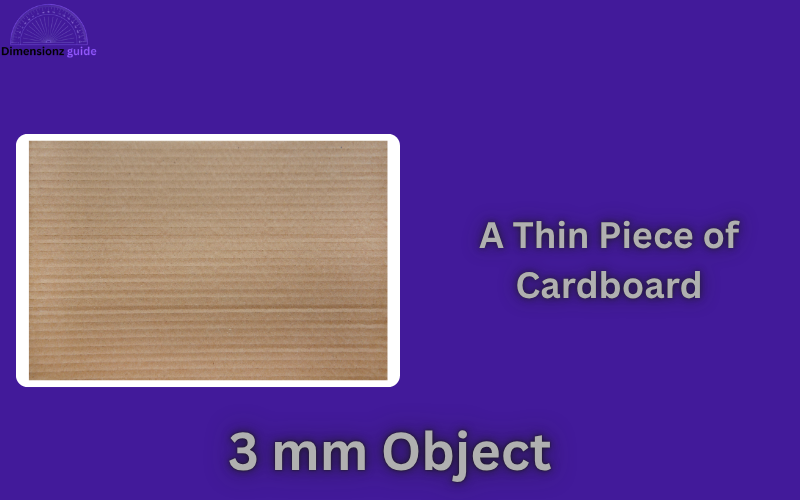
Some thin cardboard sheets are approximately 3 mm thick, although packaging cardboard can be thinner or considerably thicker. This type of material is often found in craft supplies, lightweight packaging, and small protective inserts.
Imagine holding a piece of cardboard between your fingers and looking at its edge. The thickness of the edge provides a useful way to picture a few millimeters. If the cardboard measures around 3 mm from one surface to the other, it offers a practical example of this small distance.
2. A Small Rubber Gasket
Some small rubber gaskets have a cross-sectional thickness close to 3 mm. These flexible rings are used in household fittings, plumbing connections, containers, and various mechanical parts to help create a seal.
A gasket’s thickness matters because it affects how well the component fits into its intended space. Looking at a gasket from the side can help you understand how much space 3 mm occupies. However, gasket dimensions vary, so a specific item should be measured before using it as an exact reference.
3. A Thin Craft Foam Sheet
Craft foam comes in different thicknesses, including sheets that measure around 3 mm. People use these sheets for school projects, decorations, costume accessories, handmade models, and other creative activities.
When you look at a foam sheet from the side, its edge makes the thickness easier to see. A sheet measuring 3 mm is thin enough to cut with many ordinary craft tools while still providing some cushioning and structure. This makes craft foam a useful example when visualizing small measurements.
4. A Small Plastic Spacer
Plastic spacers are used in furniture assembly, DIY projects, electronics, and mechanical applications. Some spacers are designed with a thickness of approximately 3 mm to keep two parts separated by a small, controlled distance.
A spacer demonstrates why even a few millimeters can matter. If a component needs to sit slightly away from another surface, a 3 mm spacer can create that gap. The actual thickness depends on the product, so checking the manufacturer’s specifications is important when precision is required.
5. A Thin Leather Strip
Certain thin leather pieces used for crafts, small accessories, and repair work may measure around 3 mm in thickness. Leather varies considerably depending on the animal hide, treatment, and intended use, so not every strip will match this measurement.
You can understand the scale by examining the cut edge of a leather piece rather than looking at its broad surface. The distance from the front face to the back face is its thickness. A strip close to 3 mm thick provides a helpful physical comparison for this measurement.
6. A Small Metal Washer
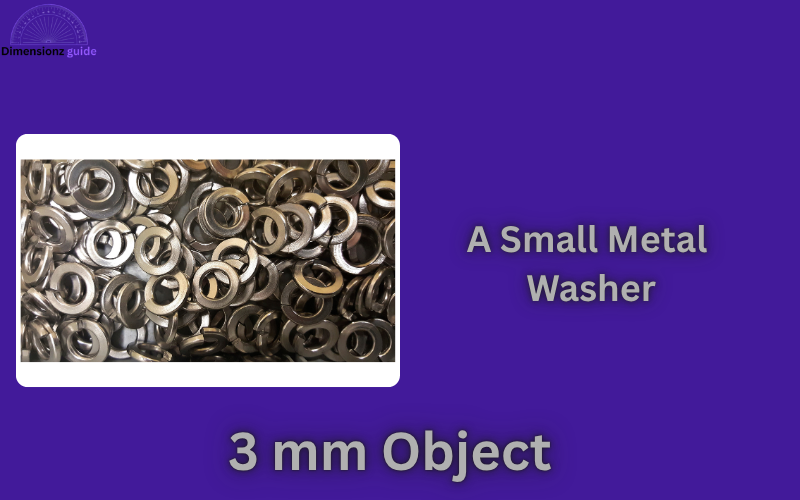
Some metal washers have a thickness close to 3 mm, although their dimensions depend on their intended application. Washers are commonly used with screws, bolts, and nuts to distribute pressure and protect the surfaces being joined.
Look at a washer from the side to see its thickness. The flat circular shape may make the object appear larger than 3 mm, but its thickness is measured across the narrow edge. This is a useful reminder that an object’s overall size and its thickness are two different measurements.
7. A Thin Wooden Craft Strip
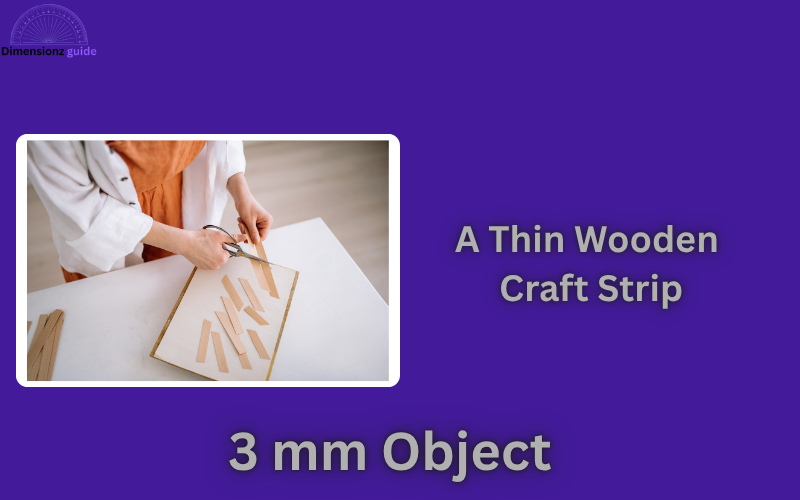
Small wooden craft strips and model-making materials are available in a range of thicknesses, including sizes near 3 mm. They are used to build miniature structures, create decorations, and make small-scale models.
When examining one of these strips, focus on the narrow edge. Its length may be several centimeters or even much longer, while its thickness may be only a few millimeters. A strip with a 3 mm thickness illustrates how a relatively large object can contain a very small dimension.
8. A Small Silicone Pad
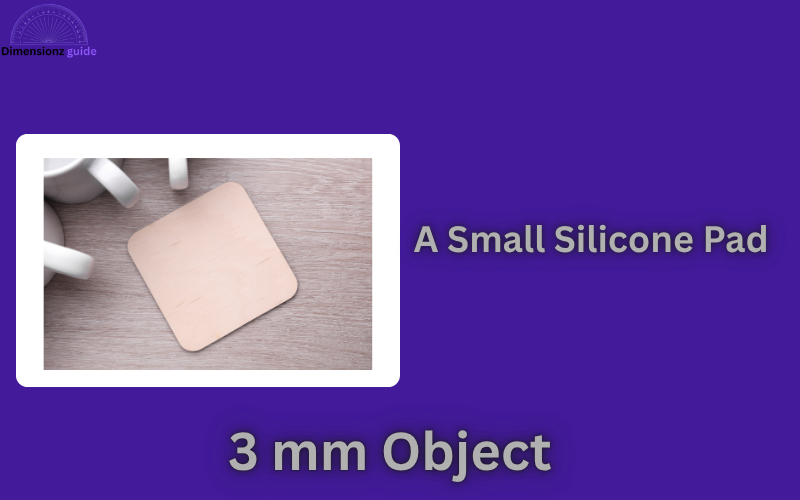
Some silicone pads used for cushioning, protection, and household applications are approximately 3 mm thick. They may be placed under small objects, used in craft projects, or incorporated into products that need a little flexibility and grip.
Silicone is soft, so its thickness can change slightly when pressure is applied. To use it as a comparison, examine the pad without compressing it and measure its edge with a ruler or caliper. A pad that measures around 3 mm gives a useful example of the measurement.
9. A Thin Plastic Sheet
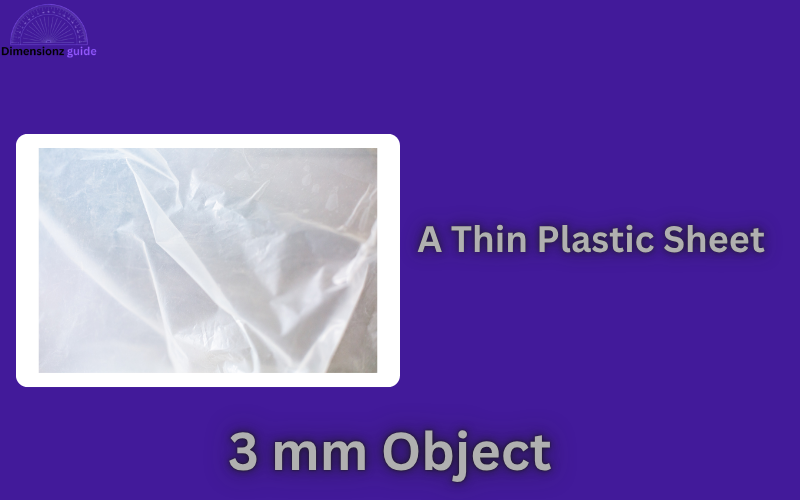
Certain plastic sheets used in packaging, crafts, and product components can be around 3 mm thick. Plastic sheets are manufactured in many sizes, and their thickness affects how flexible, rigid, or durable they are.
The easiest way to visualize the thickness is to look at the cut edge of the sheet. Its surface might cover a large area, but the distance between its two faces can still be just 3 mm. Because plastic materials come in many thicknesses, checking the product specifications is the best way to confirm an exact measurement.
10. A Small Cork Sheet
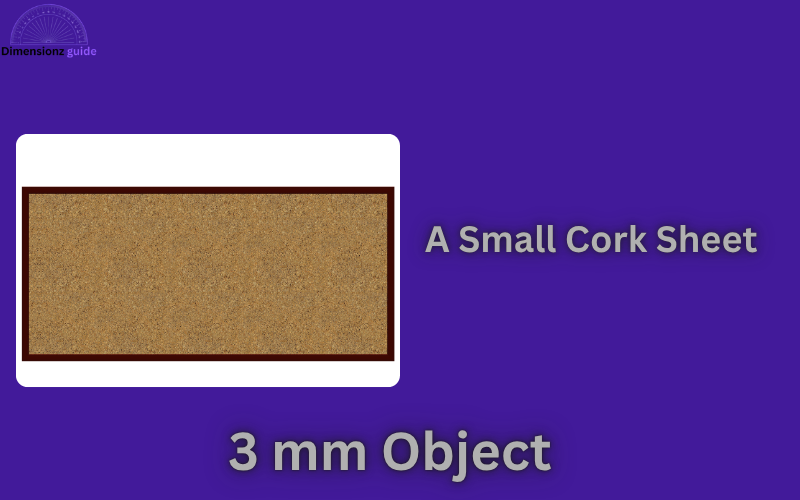
Cork sheets are used for crafts, protective layers, small boards, and various household projects. Some thin cork materials measure close to 3 mm thick, although thicker versions are also common.
Cork provides another practical comparison because its edge is easy to inspect. Its slightly textured surface can make the material look thicker than it actually is, so measuring from one flat face to the other is more reliable than judging by appearance alone. A cork sheet near 3 mm thick helps demonstrate the scale of this measurement.
Why Is Understanding 3 mm Useful?
Understanding 3 mm can be helpful in everyday situations where small differences affect how objects fit or function. For example, when choosing a spacer, selecting craft material, checking a gasket, or comparing sheet thicknesses, a difference of just a few millimeters may be important.
This measurement can also be useful for DIY projects and basic repairs. If a replacement component needs to fit into a narrow space, knowing its thickness helps you choose the right size. In design and manufacturing, small measurements can influence how parts align, how much clearance is available, and whether a component fits correctly.
How to Measure 3 mm Without Guessing
The simplest way to check 3 mm is to use a ruler with millimeter markings. Find the zero mark and count three small millimeter intervals. The distance from zero to the third millimeter mark is 3 mm.
For more precise work, a digital caliper is often a better choice. It can measure small thicknesses more accurately than estimating by sight. Place the measuring surfaces gently against the object without squeezing soft materials, as pressure may change the reading.
If you do not have a measuring tool, the objects discussed above can provide a general visual reference. However, avoid assuming that a material is exactly 3 mm thick just because it looks similar. Use a proper measuring tool whenever the measurement affects fit, safety, or performance.
Common Mistakes When Visualizing 3 mm
One common mistake is confusing millimeters with centimeters. Since 1 centimeter equals 10 millimeters, 3 mm is only 0.3 cm. It is much smaller than 3 cm.
Another mistake is judging thickness by an object’s length or width. A plastic sheet can be several centimeters wide but only 3 mm thick. Always identify which dimension you need to measure.
It is also important to remember that everyday objects are not manufactured to one universal size. A gasket, washer, foam sheet, or piece of cardboard may vary in thickness. These examples help you picture the scale, but they should not replace an actual measurement when accuracy matters.
If you find this helpful and want more free guides like this then here we have more for you:
- 9 Common Everyday Things That Are About 1 mm Long
- 8 Common Everyday Things That Are About 2 mm Long
- 9 Common Everyday Things That Are About 28 Feet Long
- 10 Common Everyday Things That Are About 27 Feet Long
- 11 Common Everyday Things That Are About 26 Feet Long
FAQs
Is 3 mm bigger than 1/8 inch?
No. Three millimeters is approximately 0.118 inches, while one-eighth of an inch is 0.125 inches. Therefore, 3 mm is slightly smaller than 1/8 inch.
How many centimeters is 3 mm?
Three millimeters equals 0.3 centimeters. Since there are 10 millimeters in one centimeter, divide 3 by 10 to convert the measurement.
Is 3 mm considered thick?
It depends on the material and its purpose. For a thin sheet or small spacer, 3 mm may be a noticeable thickness. For a large piece of wood or a thick household object, it is relatively small.
Can I estimate 3 mm with my fingers?
You can try to visualize the size, but estimating such a small distance with your fingers is not very accurate. A ruler with millimeter markings or a caliper provides a more reliable measurement.
What is the easiest way to see 3 mm?
Use a ruler and look at the space between the zero mark and the 3 mm mark. You can also inspect the edge of a material that has been measured to be approximately 3 mm thick.
Related Post: 9 Common Everyday Things That Are About 1 mm Long
Conclusion
Three millimeters is a small measurement equal to 0.3 centimeters or approximately 0.118 inches. Thin cardboard, rubber gaskets, craft foam, plastic spacers, leather strips, metal washers, wooden craft strips, silicone pads, plastic sheets, and cork sheets can help you picture this size when their thicknesses are close to 3 mm.
Remember that these are approximate everyday comparisons, not guaranteed dimensions. If you need an exact 3 mm measurement for a repair, craft project, or product fit, use a ruler with millimeter markings or a suitable caliper.