
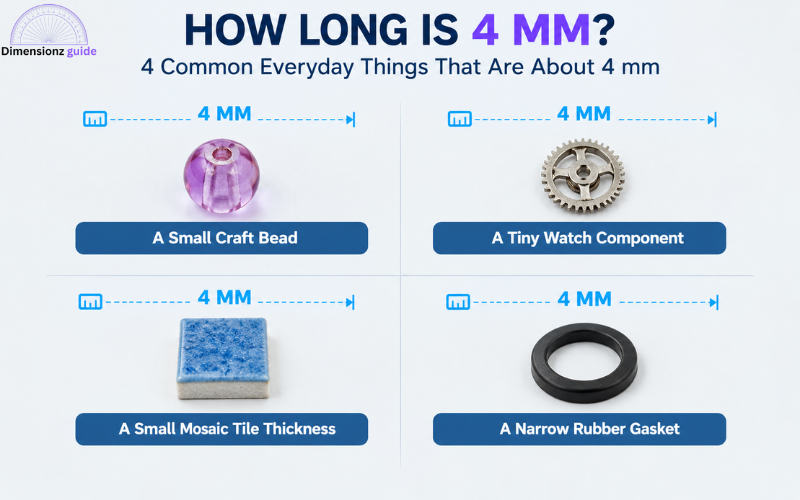
How big is 4 mm? Four millimeters is a very small measurement equal to 0.4 centimeters or approximately 0.157 inches. It is less than half a centimeter, making it difficult to estimate accurately without a ruler or another familiar reference. Although 4 mm may seem tiny, this measurement can be useful when checking small household items, jewelry components, electronic parts, and everyday objects. Comparing it with familiar items can help you understand its size more easily.
How Big Is 4 mm?
4 mm is equal to 0.4 centimeters, 0.157 inches, or approximately 5/32 of an inch. It is slightly smaller than half a centimeter. You can imagine this measurement as a small gap, a narrow component, or the thickness of certain small materials. However, the exact size of everyday objects varies, so these comparisons are useful for visualization rather than precise measurement.
4 mm Conversion Table
Understanding the equivalent measurements makes it easier to picture 4 mm when using different measuring systems.
| Measurement Unit | Equivalent to 4 mm |
| Millimeters | 4 mm |
| Centimeters | 0.4 cm |
| Inches | 0.157 inches |
| Meters | 0.004 m |
| Feet | 0.0131 ft |
The most useful conversion to remember is that 4 mm equals 0.4 cm. Since one centimeter contains 10 millimeters, four millimeters is four-tenths of a centimeter. In inches, it is a little over 3/20 of an inch, making it a small fraction of a standard inch.
See Also: How Big Is 10mm
What Does 4 mm Look Like?
Four millimeters is small enough to fit within the width of many tiny components and narrow spaces. It is not as large as a typical pencil eraser or the width of a fingernail, so choosing a smaller reference is helpful when estimating it.
One way to visualize 4 mm is to look at the thickness or width of small manufactured parts. The measurement may represent a narrow edge, a compact bead, or a tiny opening, depending on the object. Keep in mind that an item’s overall length, width, and thickness are different dimensions. When comparing objects with 4 mm, always identify which dimension you are estimating.
Related Post: 8 Common Everyday Things That Are About 2 mm Long
8 Common Things That Are About 4 mm
The following examples can help you visualize a measurement of 4 mm. Not every example will measure exactly 4 mm, because products vary in design and manufacturing. Use them as general size references, and check the actual dimensions when accuracy matters.
1. A Small Craft Bead
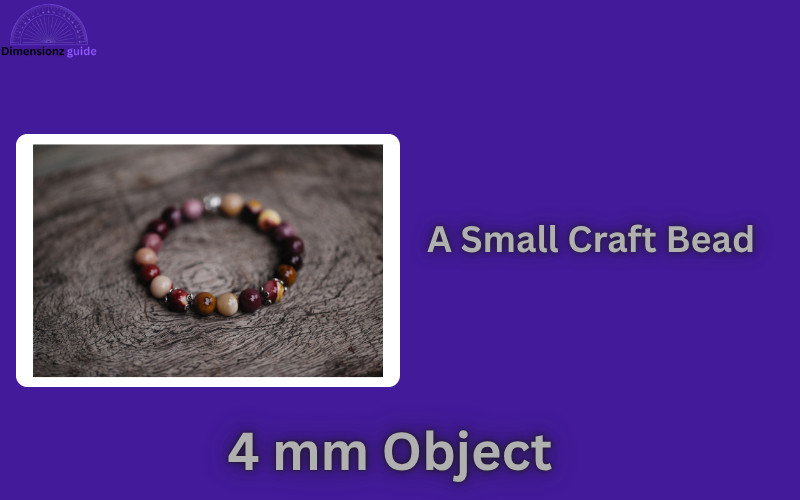
Some small craft beads measure around 4 mm in diameter. These beads are commonly used to make bracelets, necklaces, decorative accessories, and small craft projects. Their compact size allows several beads to fit closely together on a thin thread or jewelry wire.
A bead measuring 4 mm across is noticeably smaller than many decorative beads used in chunky jewelry. Looking at small beads can help you understand how little space four millimeters occupies. Bead sizes differ, so check the package dimensions before using one as an exact reference.
2. A Tiny Watch Component

Watches contain many small components that must fit together inside a limited space. Certain screws, pins, and other internal parts may measure approximately 4 mm in one dimension, although their sizes vary considerably by watch design.
A component this small can be difficult to handle with fingers alone. Watchmakers often use precision tools to inspect and adjust these parts. This example helps demonstrate why a difference of only a few millimeters can matter when working with compact mechanical devices.
3. A Small Mosaic Tile Thickness
Some miniature mosaic tiles and decorative craft tiles have thicknesses around 4 mm. These tiles are used in artwork, small decorative surfaces, and selected home improvement projects. Their thickness is much smaller than the width of a typical floor tile, making them a useful reference for understanding a short measurement.
When you view a tile from the side, its edge shows how little distance separates its front surface from its back. A 4 mm edge would appear narrow when compared with the tile’s overall width. Actual tile thickness depends on the material and product style.
4. A Narrow Rubber Gasket
Small rubber gaskets and sealing rings come in many dimensions. Some have a cross-section or thickness close to 4 mm, depending on the application. They are used in equipment, plumbing connections, containers, and other products where a flexible seal helps limit leaks or keep out dust.
A gasket measuring 4 mm thick may look small on its own, but its thickness can be important for creating a proper fit. This makes it a practical example of how a few millimeters can influence how two parts connect. Always use the manufacturer’s specified size when replacing a gasket.
5. A Small Flat-Head Screw
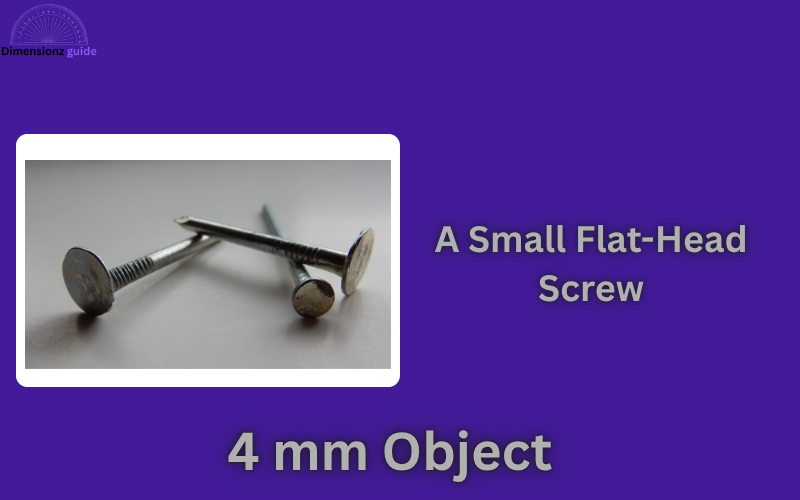
Some small flat-head screws have a head height or another dimension close to 4 mm. These fasteners are used in small fixtures, hobby projects, electronics accessories, and lightweight assemblies. However, screw dimensions vary by type, thread, head design, and intended use.
Looking at a small screw from the side can help you picture a measurement of this size. The head may be only a few millimeters tall even when the screw itself is longer. Do not assume every small screw measures 4 mm; use its stated specifications for repairs or assembly.
6. A Compact Plastic Spacer
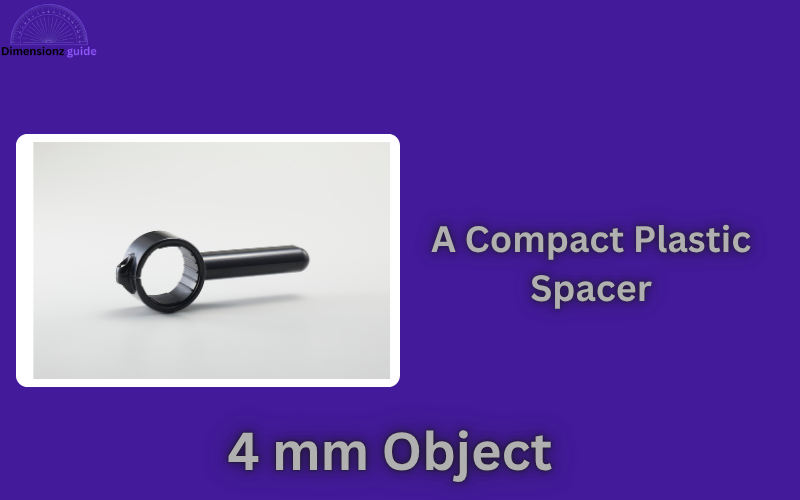
Plastic spacers are small pieces used to keep components separated by a specific distance. Some spacers are made with a thickness of approximately 4 mm, making them useful in craft projects, furniture fittings, model building, and certain mechanical assemblies.
A 4 mm spacer creates a gap that is less than half a centimeter. Although this may seem insignificant, the distance can help align parts or prevent surfaces from touching. Spacers come in different shapes and thicknesses, so the actual measurement depends on the design.
7. A Small Sewing Button
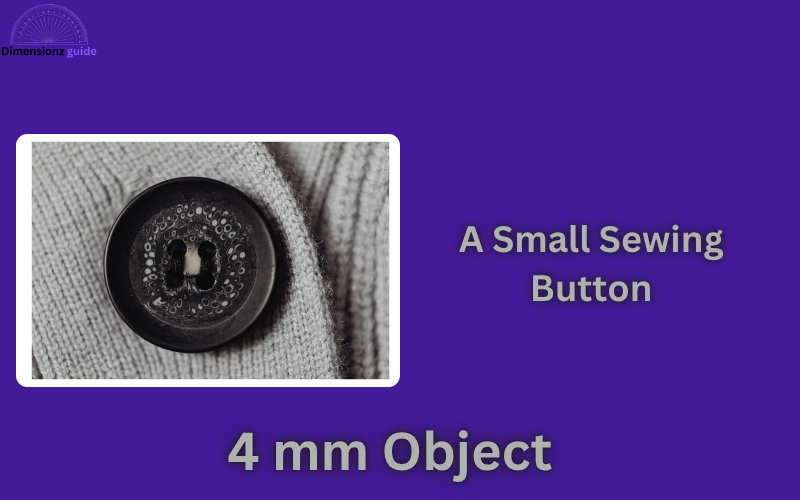
Some miniature sewing buttons have a diameter close to 4 mm, although many ordinary clothing buttons are considerably larger. Tiny buttons may be found on doll clothing, miniature costumes, craft decorations, and specialty garments.
Because a 4 mm button is very small, its holes and edges can be difficult to see clearly without looking closely. Comparing one with a ruler can show how much space four millimeters covers. Button sizes vary, so this is best treated as a possible example rather than a universal measurement.
8. A Thin Craft Foam Sheet

Certain thin craft foam materials are available in thicknesses around 4 mm. They are used for school projects, model making, decorative shapes, lightweight padding, and handmade displays. A foam sheet with this thickness has a small but visible edge when viewed from the side.
This example is useful because the thickness can be compared directly with a ruler’s millimeter markings. A 4 mm foam sheet is less than half a centimeter thick, even if the sheet itself is much wider and longer. Check the product label to confirm the thickness of a particular sheet.
Why Is Understanding 4 mm Useful?
Knowing what 4 mm looks like can help with small DIY projects, craft work, repairs, and product comparisons. For example, a spacer that is too thick may prevent two pieces from fitting together correctly, while an incorrectly sized gasket may not seal properly.
This measurement can also help when shopping for jewelry supplies, miniature accessories, screws, or replacement parts. Product listings often provide measurements in millimeters, especially when describing small components. Recognizing the size makes those specifications easier to interpret.
However, visual comparisons are not a substitute for measuring. If you need a precise fit, use a ruler with millimeter markings, a suitable caliper, or the manufacturer’s measurements.
How to Measure 4 mm Accurately
To measure 4 mm, use a ruler that has millimeter markings. Place the object or the edge you want to measure alongside the ruler, align one end with the zero mark, and check where the other end falls.
For very small components, digital calipers can provide a clearer measurement. Make sure the tool is positioned correctly and does not squeeze soft materials, such as rubber or foam, enough to change their dimensions.
If you only have a ruler marked in centimeters, remember that each centimeter contains 10 millimeters. Four millimeters is therefore four of the ten equal divisions within one centimeter.
Common Mistakes When Visualizing 4 mm
One common mistake is confusing 4 mm with 4 cm. Four centimeters equals 40 mm, so it is ten times larger than 4 mm. Another mistake is assuming that every item described as small has a dimension close to four millimeters.
It is also important to distinguish between an object’s diameter, width, length, and thickness. A bead might be 4 mm wide, while a foam sheet might be 4 mm thick. These dimensions describe different directions, even when they share the same numerical measurement.
For the best estimate, identify the dimension you need and check it directly whenever precision is important.
If you find this helpful and want more free guides like this then here we have more for you:
- 9 Common Everyday Things That Are About 1 mm Long
- 8 Common Everyday Things That Are About 2 mm Long
- 10 Common Everyday Things That Are About 3 mm Long
- 9 Common Everyday Things That Are About 28 Feet Long
- 10 Common Everyday Things That Are About 27 Feet Long
FAQs
Is 4 mm bigger than half a centimeter?
No. Half a centimeter equals 5 mm, so 4 mm is 1 mm smaller than half a centimeter.
How many inches is 4 mm?
Four millimeters is approximately 0.157 inches, which is slightly less than 5/32 of an inch.
Is 4 mm considered small?
Yes. Four millimeters is a small measurement, less than half a centimeter. It is commonly useful for describing small components, narrow gaps, and thin materials.
Can I measure 4 mm with a regular ruler?
Yes, if the ruler includes millimeter markings. Align the object with the zero mark and read the measurement carefully. For very small components, calipers may be easier to use.
Is 4 mm the same as 0.4 cm?
Yes. Since 10 millimeters equal 1 centimeter, 4 mm equals 0.4 cm.
Related Post: 10 Common Everyday Things That Are About 3 mm Long
Conclusion
Four millimeters is a small but useful measurement that equals 0.4 cm or approximately 0.157 inches. Small craft beads, miniature components, thin spacers, and selected materials can provide helpful comparisons, although their dimensions vary. Understanding these examples makes it easier to picture 4 mm when reading product specifications or planning a project. For an exact result, always measure the specific object rather than relying on visual estimates.
