
Key Takeaways
- Small chimney defects can allow moisture to reach the roof, attic, walls, and interior finishes.
- Crumbling mortar, cracked brick, rust, water stains, and changes in fireplace performance are important warning signs.
- A ground-level visual check is useful, but roof-level, flue, and structural work should be handled by a qualified professional.
- Annual inspection helps identify deposits, animal nests, deterioration, and other conditions that may not be obvious from the firebox.
- Lasting repairs address the water entry point rather than covering the visible stain or crack.
Atlanta’s rain, summer humidity, wind-driven storms, and changing seasonal temperatures can all expose weak points in a chimney. Because water may travel through masonry, flashing, roof decking, or framing before it becomes visible indoors, a faint ceiling mark or loose mortar joint deserves attention.
For homeowners who need a closer evaluation, chimney repair in Atlanta Ga from Southern Chimneys covers leak detection, masonry restoration, crown and flashing repairs, flue concerns, and structural chimney problems. The family-owned Metro Atlanta company serves areas including Buckhead, Decatur, Druid Hills, and Virginia-Highlands, with repair solutions designed for everything from isolated brick damage to larger restoration needs.
Why Chimney Damage Can Stay Hidden
A chimney is not one single part. It includes brick or siding, mortar, a crown or chase cover, a cap and flashing at the roofline and inside the flue. If one component fails, rain can take an indirect path before appearing around the fireplace. That is why a stain near the mantel does not automatically mean the masonry is the source. It could involve flashing, a crown crack, a missing cap, or a roof issue beside the chimney.
Even a fireplace that looks normal can have damage above the roofline or inside the flue. The Chimney Safety Institute of America’s homeowner guidance notes that annual inspections can reveal problems such as nests and deterioration, including in chimneys that see limited use.
Seven Early Signs That Deserve Attention
1. Crumbling or Missing Mortar
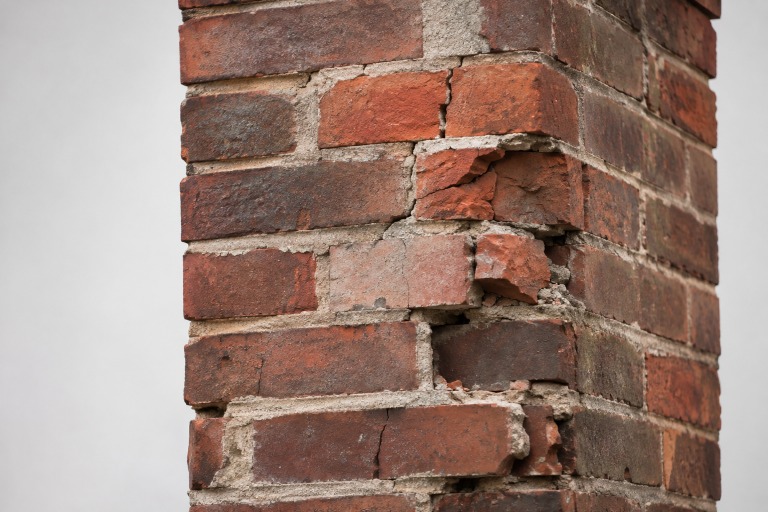
Mortar holds masonry units together and helps resist weather. Open joints allow water to enter behind the brick, where moisture can accelerate deterioration over time. Repointing may be appropriate when damage is limited, but the mortar type and installation method should suit the existing chimney.
2. Cracked or Spalling Bricks
Spalling means the brick face is flaking, breaking, or falling away. It can occur when moisture enters masonry, contributing to surface deterioration. Loose bricks or falling debris near a doorway, driveway, or roof edge should be treated as a safety issue.
3. Water Stains, Musty Odors, or Peeling Paint
Check ceilings, upper walls, attic areas, and the surfaces around the fireplace. A musty odor that becomes stronger after rain can also be a useful clue. Photograph changes and note whether they appear after a particular storm, since timing can help identify the path of water intrusion.
4. Rust on Dampers or Metal Components
Rust on a damper, firebox component, chase cover, or other metal part can indicate repeated exposure to moisture. Corrosion may also interfere with moving parts, so avoid forcing a stuck damper or using the fireplace until its condition is understood.
5. A Leaning or Separated Chimney
A chimney that visibly tilts, rotates, or separates from the house is not merely cosmetic. It may point to structural movement or failure. Stop using the fireplace and arrange a prompt professional assessment.
6. Debris in the Firebox
Fallen mortar, brick fragments, leaves, nesting material, or unusual flakes can indicate damage or obstruction above the firebox. Do not reach into the flue to investigate. A flashlight inspection from the hearth is the safer limit for most homeowners.
7. Changes in Smoke or Fireplace Performance
Smoke entering the room, a weak draft, unusual odors, or difficulty opening the damper may indicate a blockage, flue damage, venting issues, or a malfunctioning component. These changes deserve evaluation before another fire is lit.
A Safe Homeowner Check From the Ground
- Walk around the home and look for missing mortar, cracked bricks, stains, and visible leaning.
- Inspect nearby ceilings, walls, and attic spaces for moisture marks or peeling finishes.
- From a safe location, look for a missing, bent, or heavily rusted cap or chase cover.
- Use a flashlight to view the firebox and damper without entering the flue.
- Take clear photos and record when each condition was first noticed.
- Do not climb onto the roof, lean a ladder against the chimney, or attempt interior flue repairs.
When a Chimney Inspection Becomes Necessary
Schedule an inspection when you see damage, experience a chimney fire, buy a home, replace heating equipment, or notice storm-related changes. Routine checks are also important. The U.S. Fire Administration advises annual professional cleaning and inspection of chimneys as part of heating equipment maintenance.
Common Sources of Chimney Leaks
- Chimney crown: Cracks can allow water into the masonry below.
- Flashing: Gaps at the roof-to-chimney connection can allow water to enter the attic or ceiling.
- Masonry: Damaged brick and mortar can absorb moisture and transfer it inward.
- Cap or chase cover: Missing, rusted, or damaged coverings can allow rain, leaves, and animals into the chimney.
- Flue liner: Deterioration can affect safe operation and fireplace performance.
Repair or Rebuild: What Is the Difference?
Localized defects may call for repointing, brick replacement, crown repair, flashing work, or a suitable masonry water-repellent treatment. Widespread deterioration, severe leaning, or major flue damage can require partial rebuilding or restoration. The right scope should follow an inspection, not a quick guess based only on the most visible symptom.
Questions to Ask Before Approving Chimney Work
- What is the exact source of the damage?
- Is the issue cosmetic, structural, roof-related, or connected to the flue?
- Can the contractor provide photos and written findings?
- Will the proposed work stop the source of moisture?
- Should the chimney remain out of service until repairs are complete?
How to Reduce Future Chimney Problems
Keep the cap, crown, and flashing in good condition. Address mortar cracks before they spread, inspect interior areas after major storms, and burn only properly seasoned wood in a wood-burning fireplace. Keep combustible items away from the hearth, and maintain working smoke and carbon monoxide alarms.
Frequently Asked Questions
Can a chimney leak be fixed with waterproofing alone?
Not always. A water-repellent treatment may help protect sound masonry, but it cannot replace damaged brick, repair failed flashing, or correct a cracked crown. Identify and repair the source first.
Is a leaning chimney an emergency?
Visible movement or separation can indicate a serious structural concern. Do not use the fireplace, keep people clear of any area where masonry could fall, and arrange a prompt assessment.
How often should a chimney be inspected?
An annual professional inspection is commonly recommended. Additional inspection is appropriate after a chimney fire, significant storm damage, a home purchase, or a change in heating equipment.
What should homeowners do if water appears near the fireplace?
Stop using the fireplace, photograph the affected area, and arrange an inspection that considers the chimney, roof connection, masonry, and interior surfaces. Early action can preserve more repair options and help prevent a small leak from becoming a larger Atlanta home repair.