
Table of Contents
- Why Fragrance Radius Matters
- Three Ways Scent Is Noticed
- How Setting Changes Fragrance
- Choosing Scent for Work
- Wearing Fragrance in Public
- Weather and Airflow
- Skin, Clothing, and Materials
- A Simple Fragrance Test
- Common Fragrance Mistakes
- Frequently Asked Questions
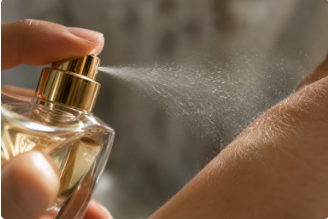
Fragrance is personal, but it is also shared with the people around you. A scent that feels polished outdoors in the evening can feel overwhelming in a meeting room, a car, or a crowded elevator. Understanding sillage vs projection explained can help you think beyond whether a fragrance is “strong” or “weak.”
The goal is not to make fragrance invisible. It is to choose an amount and style that fits the setting. Room size, airflow, weather, clothing, distance from others, and time of day can all affect how noticeable a scent feels.
Why Fragrance Radius Matters
Your fragrance radius is the space in which other people can notice your scent. It is not a fixed measurement because formulas, skin, fabric, temperature, movement, and ventilation all change the result. Still, the concept is useful: a fragrance that works beautifully on a walk or at an open-air celebration may be too present at a shared desk.
More noticeable does not automatically mean better. In close settings, a smaller radius is often more considerate and can make the fragrance feel more refined. Think of scent as part of your personal space, not as something that needs to fill every space you enter.
Three Ways Scent Is Noticed
Fragrance performance is easier to judge when you separate three related ideas:
- Reach: How far away a person may notice the scent while standing near you.
- Trail: The trace of fragrance that can remain in the air after you move through a space.
- Wear time: How long the scent remains detectable on skin or fabric.
A fragrance can last for hours while staying close to the skin. Another may feel expansive during its opening minutes but become much quieter later. These differences are why “strong” is rarely enough information when deciding how to wear a scent.
How Setting Changes Fragrance
- Shared office: Apply lightly and keep the scent close to the body, since coworkers may have different preferences or sensitivities.
- Outdoor event: Open air disperses scent quickly, so a fragrance with a little more presence may feel appropriate.
- Restaurant: Keep application restrained so fragrance does not compete with food and drink aromas.
- Date or dinner: Choose a scent that is most noticeable at close range for a more personal effect.
- Travel: Use less than usual in cars, planes, trains, and rideshares, where ventilation and personal space can be limited.
Choosing Scent for Work
Test a fragrance at home before making it part of your work routine. Start with one spray, allow the opening to settle, and notice how it behaves after an hour. Close-wearing fragrances are often easier to manage in open-plan offices, classrooms, retail floors, and shared workspaces. In medical environments or scent-sensitive workplaces, it may be best to skip fragrance entirely and follow workplace policy.
- Apply fragrance before entering the workplace.
- Give the first burst time to settle before deciding whether you need more.
- Avoid reapplying simply because you no longer notice the scent yourself.
- Keep fragrance away from food areas, shared equipment, and enclosed meeting rooms.
Wearing Fragrance in Public
Public settings require extra awareness because other people cannot always move away from a scent. Elevators, cinemas, waiting rooms, public transportation, hospitals, and small cafés are all close quarters. Heat, body warmth, and movement can also make a scent seem more noticeable than it did when you first applied it.
A practical rule is to scale back when people will be standing close to you. If a fragrance is noticeable from several steps away, reduce the number of sprays in crowded indoor spaces.
Weather and Airflow
Warm weather can make fragrance feel more active, while cold weather can make some scents seem slower or quieter. Wind can break up a scent cloud outdoors, although it may carry brief traces farther away. In contrast, still air can allow fragrance to build in a small room. Humidity may also change how a scent feels in the air and on skin.
There is no universal spray count for every season. Adjust gradually, and judge the result in the actual setting where you plan to wear the fragrance.
Skin, Clothing, and Materials
Skin, hair, cotton, wool, and synthetic fabrics can all hold fragrance differently. Skin usually creates a more personal, evolving experience because warmth and natural skin chemistry influence what you smell. Fabric can hold scent longer, but it may also retain it after you are ready to switch fragrances. How scents cling to different materials is also a useful illustration of why a perfume may disappear quickly from one surface yet linger on a thick fabric.
Test clothing spray on an inconspicuous area first, especially with delicate or light-colored materials. Moisturized skin may help fragrance remain noticeable, but longer wear time does not necessarily create greater reach.
A Simple Fragrance Test
- Use the same number of sprays for every test.
- Apply to clean skin and record the temperature and setting.
- Check the scent after 15 minutes, one hour, three hours, and later in the day.
- Ask a trusted person whether it feels close, moderate, or room-filling.
- Repeat the test on another day before making a final decision.
One test is not always enough. Dry indoor air, humid weather, physical activity, and clothing choices can all change your impression of the same fragrance.
Common Fragrance Mistakes
- Adding more because you have become used to the smell.
- Judging a fragrance only by its first few minutes.
- Assuming higher concentration always means more reach.
- Expecting a paper test strip to smell exactly like skin.
- Using the same amount indoors and outdoors.
- Spraying heavily before entering a small room or public transport.
- Rubbing fragrance into the skin after application.
Frequently Asked Questions
How Much Fragrance Should Be Worn to Work?
Start with one spray and test it in your normal work environment. The right amount depends on the room, ventilation, fragrance style, and the people sharing the space.
Why Can Other People Smell a Fragrance When the Wearer Cannot?
This can happen because repeated exposure can make a steady smell seem less noticeable to the wearer. The way odor molecules activate specialized receptors and send signals toward the brain is part of the complex biology described in research on odor receptors in the nose.
Does a Longer-Lasting Fragrance Always Project More?
No. A fragrance can remain close to the skin for many hours without filling a room. Wear time, reach, and trail are separate qualities.
Is It Better to Apply Fragrance to Skin or Clothing?
Skin often gives a more personal result, while fabric may hold scent longer. If you spray clothing, test the material first and avoid delicate fabrics unless the product label indicates it is suitable.
Conclusion
Good fragrance wear is about balance. Choose your application based on the setting, weather, airflow, distance from others, and how the scent develops over time. With a simple testing routine and a little social awareness, fragrance can feel like a confident finishing touch rather than the loudest thing in the room.
Read More: AI Influencers Are Transforming How Consumers Interact with Brands Online